Revisiting When Amar’e Stoudemire Shifted the Empire State of Mind
The Training Center is a sprawling, nondescript facility located in Tarrytown, NY, a small village (pop. 11,090) nestled between Sleepy Hollow and Irvington along the western border of Westchester County. Situated about 17 miles north of Manhattan, the center is joined on the bland Old Saw Mill River Road by a small handful of buildings, most of which belong to Con Edison, one of the main providers of New York City’s gas and electricity. Each day, hordes of people from the surrounding suburbs—from Nyack to the West, Pleasantville and Hawthorne to the North, White Plains to the East, Dobbs Ferry and Yonkers to the South—pile in their cars and come to work right here on this monotonous street that employs thousands but houses none.
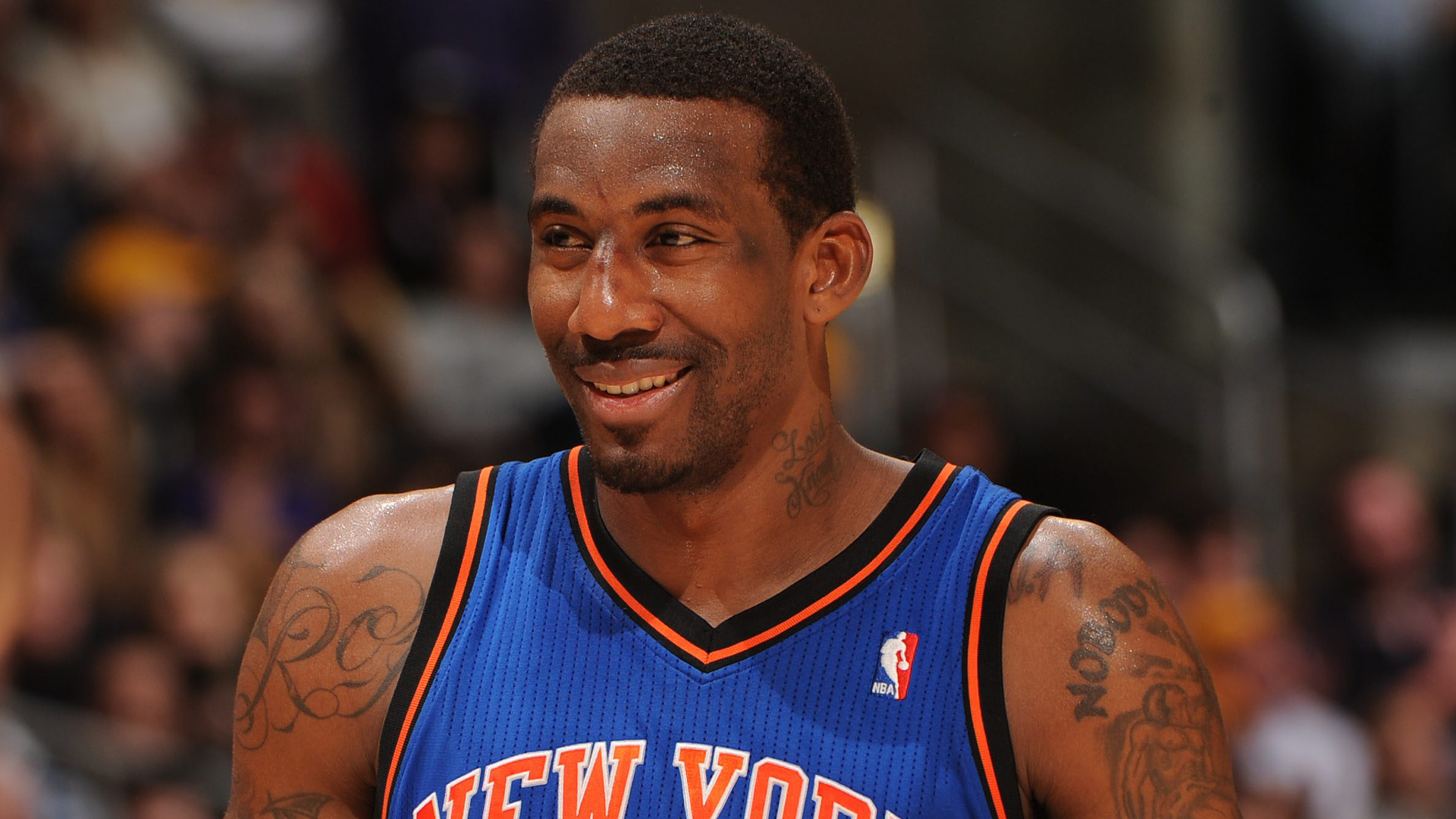
On this gray, icy post-snowstorm day in early February, only a few hundred feet away from Con Ed, the real supplier of the Big Apple’s recent energy surge just clocked out. Following a laid-back “recovery day” at practice, Amar’e Stoudemire looks, well, recovered.
“I feel great, man,” he says. No concerns about the damage your body has taken, like the knee-banging collision with Ben Gordon days earlier that’s limited you the past few days?
“Nah. I’m not worried about it.”
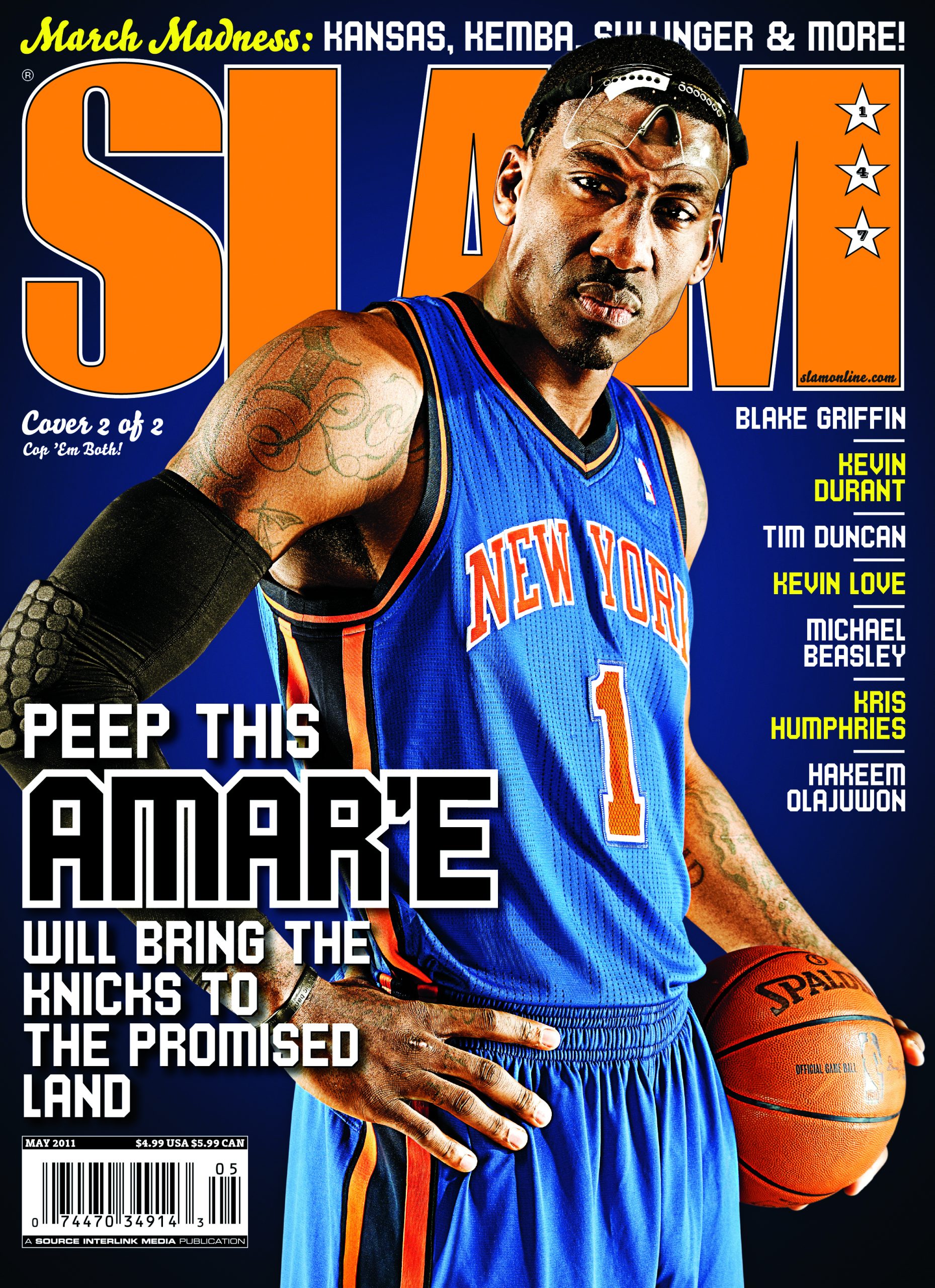
STAT is lounging in a folding chair off to the side of the court, where minutes earlier he posed for a SLAM cover, making him the first Knick to grace the front of this magazine since Latrell Sprewell did so in the summer of ’99. Don’t bother with the math: That’s 11 and a half long-ass years since the ’Bockers have had a player with the relevance and gusto to sell a few of these bound-together pieces of paper. Give or take a season or two and a couple of false alarms, it’s been equally long since they’ve had a team that seemed on the cusp of something great. And, after all of that waiting (and with the combination of youth, cap space and potential trade opportunities that may or may not lead to the roster looking entirely different by the time you read this), sitting anywhere remotely near the cusp will do just fine.
“The Knicks Are Back.”
All it took were four words. Standing in front of the Madison Square Garden marquee, an oversized forward-facing Knicks fitted on his dome, Stoudemire pronounced the above statement in front of a handful of cameras (and a few million SportsCenter viewers) days before LeBron James signed down south. Had LeBron linked with Amar’e in NYC, the Knicks would’ve immediately become a ready-made Playoff contender; after The Decision, nobody really knew what to expect from them. Except STAT, of course, who had one destination on his mind: the postseason, a place his new organization hadn’t been since an extremely brief visit in 2004.
“I knew we had a lot of work to accomplish,” he says, “[but] I thought that the Playoff goal was something that was a great standard for us to set. When I spoke out about it—said that was our goal—a lot of folks were surprised about it. But I think that’s an honest goal for us, to try to reach the postseason. I think we just need to play as well as we can. Knowing that we have a very young team but that we have an opportunity to be very successful, the sky’s the limit for us. We can compete with the best of ’em.”
That much, it appears, is true. When we went to press, the Knicks were a modest 27-26, seated somewhat comfortably at the sixth spot in the Eastern Conference. They’re an undeniable step behind the East’s select few—Boston, Miami, Orlando, Chicago—but finally away from the will-they/won’t-they uncertainty of the eighth, ninth and 10th spots they’ve practically lived in (or beneath) for the past decade. And they’ve already beaten or been barely defeated by the entirety of the League’s elite, hinting at an untapped potential that’s stored away in every up-and-coming group. “We could have a much better record than what we have now,” Stoudemire admits. “We lost a few games that we should’ve won. Going into the second half of the year, we have to make sure that we win those games that we’re supposed to win. When we play the tougher teams, it’s a little bit tougher to win those, but [we’ll have] a better opportunity.
“We’ve got great guys, and every player wants to improve,” he continues, confidently. “When you have that camaraderie, and players that are looking to become much better players and want to reach their full potential, you’re gonna get the best out of them. You’re gonna learn, you’re gonna watch film, you’re gonna build and that’s what you want. My favorite aspect on the court, right now, is learning with my teammates. Just that experience alone, that friendship that you build from learning with each other—it’s something special.”
Not only has he invigorated the Knicks, turning them from the NBA’s doormat to a respectable bunch, but the improvements, er, changes to Amar’e’s life since his relocation are undeniable. Though he does miss some things (“The weather—it seemed to be the best weather during basketball season in Phoenix”), this new lifestyle suits him well. “New York’s more of an entrepreneur type of town, really more for accomplishing goals off the court, or away from the field, or what have you,” he says. “New York’s the perfect place to be.”
Since the signing, Amar’e has taken in Fashion Week, been photographed at the city’s hottest nightclubs, thrown out the first pitch at Yankee Stadium, made appearances on The Late Show with David Letterman and Hot 97’s The Angie Martinez Show, and he’ll soon grace the pages of the renowned fashion publication VOGUE. The television and radio features were part of a January press run that (intentionally or not) landed Stoudemire a spot in the All-Star Game’s starting lineup; the last Knick to accomplish said honor was Patrick Ewing, who did so a whopping 19 years ago.
But even Ewing, New York City’s previous basketball superstar—who was known to answer reporters’ questions with two- or three-word answers—would probably be driven mad by the 24-hour news cycle Stoudemire puts up with. Amar’e isn’t overly candid, and he remains guarded on many facets of his personal life, including too-specific questions about his religion or past injuries (“because if it’s out of sight, it’s out of mind,” he says). But despite the colossal pressure to succeed, he represents himself the way a true star is supposed to—like a giant fish in a huge pond. Which is all to say, though others may not be, Stoudemire is built for this.
“I think the media always has something to look for,” Stoudemire says. “They have to fill the papers up—there are so many papers here that require stories. I think the most important factor is just to show them respect, and they’ll show you respect. Sometimes they may write something that’s not true. I just think it’s a matter of respect. As long as you show them respect, they’ll always respect you.”
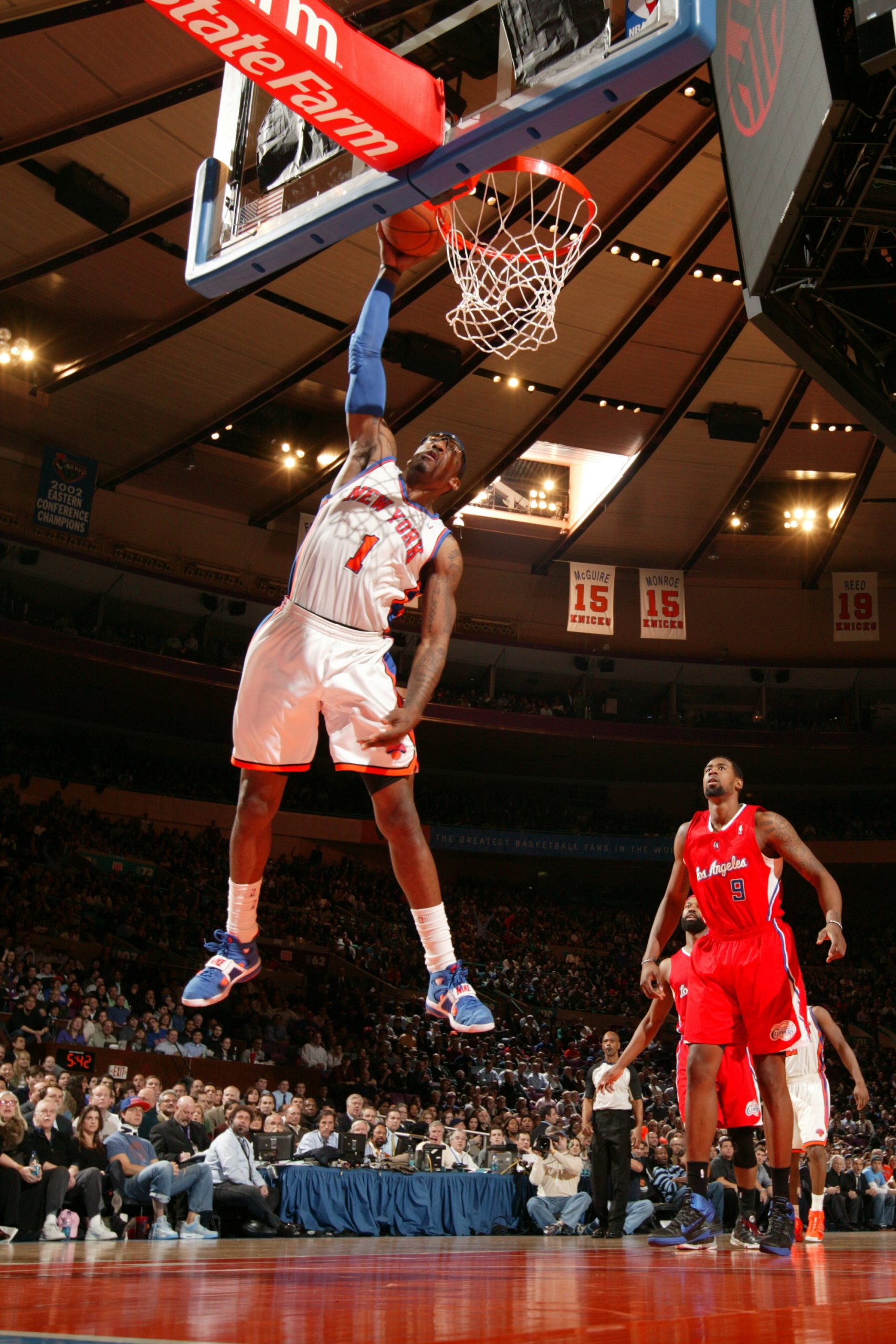
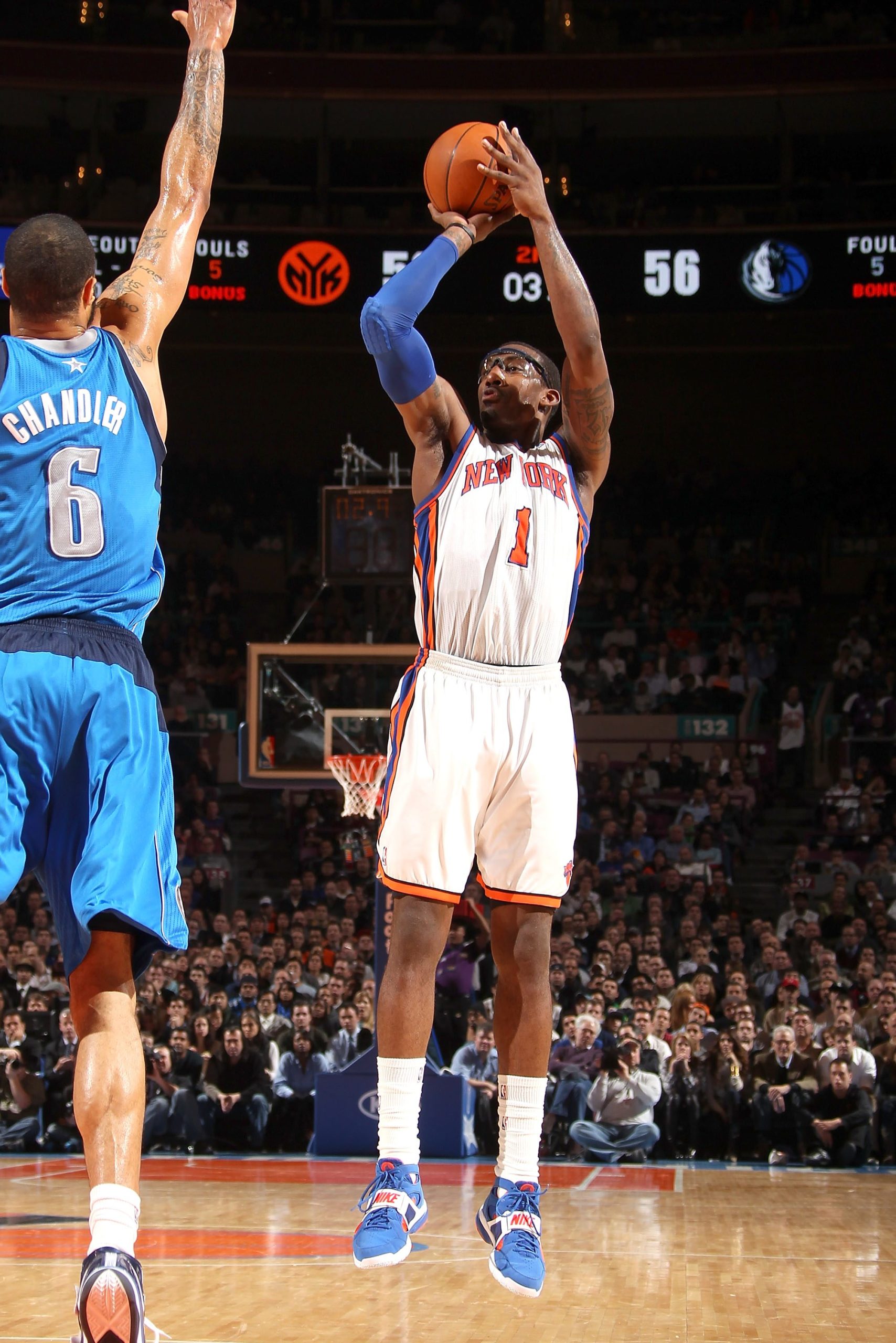
Beyond the strides STAT’s personal brand has taken over the past eight months, it’s his progress on the court that’s guaranteeing he won’t be going anywhere anytime soon. For one, he’s refined his game, slowly but steadily developing from an in-your-face dunker and around-the-rim finisher to a solid jump shooter—though he still does those first two pretty damn well. It’s exactly that evolution that helps big men remain relevant beyond their 30th birthdays (see: Garnett, Kevin). “Practice,” he credits. “It’s practice. [My jumper] has been getting better and better every year.”
And without Steve Nash or Stephon Marbury by his side, Stoudemire has had to develop into his team’s sole leader, a role he’s never had to fill. “He makes everybody step up,” says teammate Danilo Gallinari. “He knows Mike [D’Antoni], and he knows the system, so when he came here he already knew how we were going to play. He’s doing great for us.”
Knicks swingman Shawne Williams echoes Gallo’s sentiments: “He helps us with everything—it isn’t one certain thing. If you’re a leader, you’re a leader. He’s a leader in all categories. He mostly shows with his actions, [but also uses] his speaking ability. He’s a great guy.”
“I think it’s a matter of being born with the qualities of leadership,” says Stoudemire, who notes he’d happily share the leadership duties if another All-Star were to join him in New York. “And secondly, it’s learning from other leaders. Those are the aspects [of leadership] that you have to accomplish.”
While pointing teammates in the right direction on offense or holding them accountable for their actions is certainly noble, the leading Amar’e is doing off the court is what really stands out. The route Stoudemire took to the NBA was far from smooth—his father passed when he was 12, his mother was in and out of jail, and he spent his teenage years bouncing from high school to high school and sneaker company to sneaker company before the Suns drafted him out of Cypress Creek (FL) High at the age of 19—and Stoudemire, like the Notorious B.I.G. once did, has a story to tell. He’s currently putting together an autobiography and hoping kids will read it to pick up advice on how to make it through tough times. “I think the most important thing is education,” he says. “I think that’s something that might be overlooked for a lot of the youth nowadays. Secondly, leadership skills—being able to not follow those negative influences and being able to stay focused on your goals. I think those are the qualities that the youth needs to understand, and they’ll definitely get a great, great glimpse of what it takes from my book.”
 Stoudemire also hosts an annual skills academy (through Nike), and this year will be interacting with the youth face-to-face during his first Youth and Elite Youth Basketball Academies in June. There, according to a press release, he’ll assist young kids with their self-confidence and dedication to the game, something he’s, you know, pretty freakin’ good at.
“I think when you’re struggling, it’s more so [about] figuring out why you’re struggling,” Stoudemire says, “and looking yourself in the mirror, figuring out what you can do, and improve and get better. You have to support yourself before you can look for a support system or cast.”
OK, that should take care of the self-confidence issue. How about dedication? “I don’t think a lot of young players are overwhelmed by how hard you have to work to stay on top of your game, because there’s always another great player coming in, year after year,” he says. “In order to be a perennial All-Star, and stay successful, you have to continue to work at your game and continue to get better and better.”
Got it.
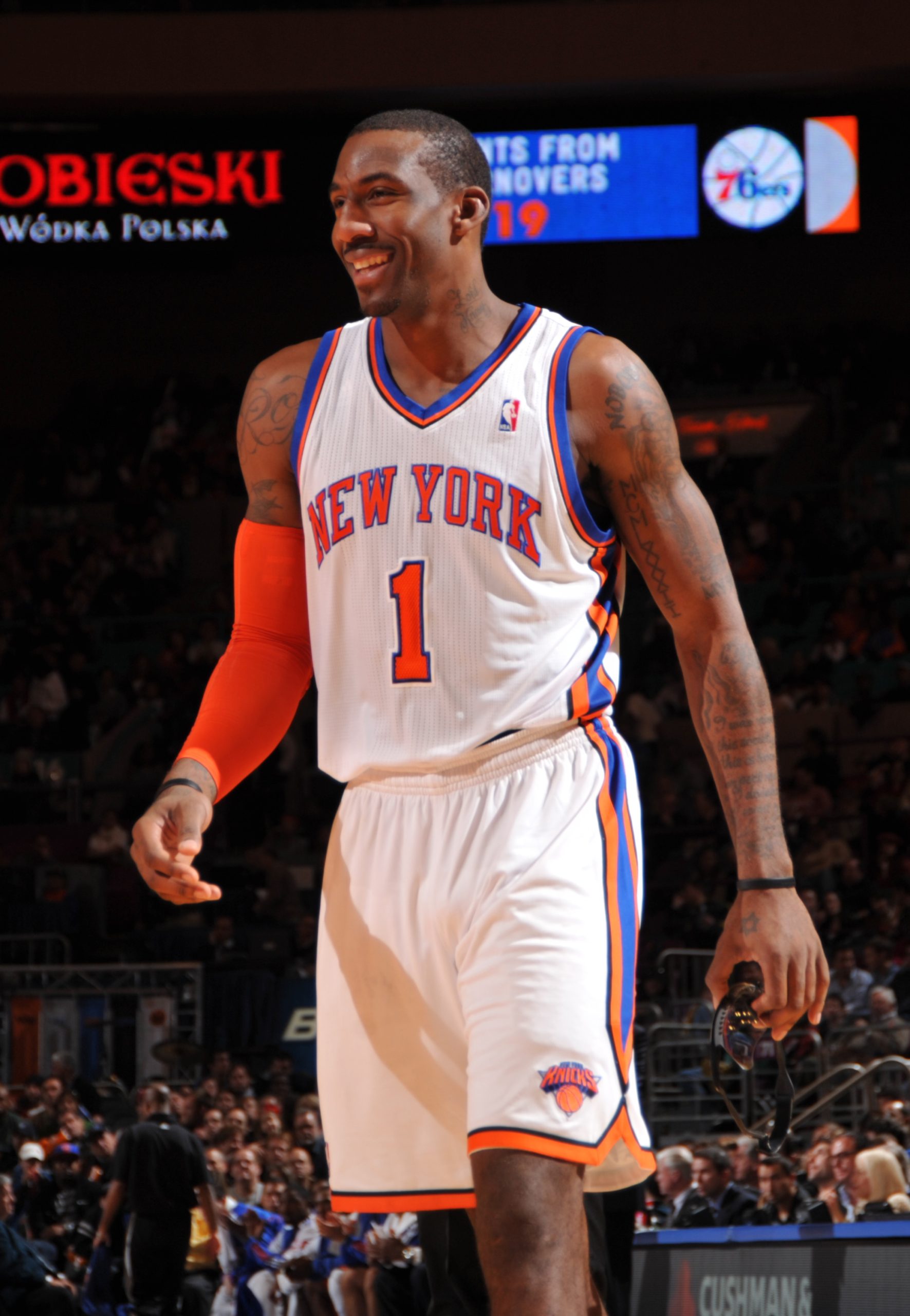
One week following the SLAM shoot, the Knicks are at the Garden to face the 76ers, to whom they lost in Philadelphia two nights earlier. After stressing the importance of this game beforehand, Stoudemire goes into beast mode, scoring 41, rebounding 7 and swatting 4, all while carrying his squad to a 117-103 victory.
A few minutes later, Head Coach Mike D’Antoni stands behind a podium, ready to field questions from the media. As is often the case around New York City these days, the first subject brought up is the team’s 6-10 power forward/center.
“He understands the big moment and the stage,” D’Antoni says. “That’s why he came to New York—he has that quality that he’s not backing down for anything, and because he’s so talented, most of the time that means big games, big moments.”
There’s a natural instinct to search for a predecessor, or an antecedent, even if only for comparison sake. It’s what fans—and lazy media members, us included—love to do. Especially in this town, the “Basketball Mecca,” where Willis, Clyde, Bernard, Patrick, John, Allan, Latrell and many others once reigned supreme. Or to find someone, past or present, with a similar style, who went through similar hardships, who persisted through them to reach a similar greatness. Anyone.
“I feel like I’m pretty much all set as far as what type of man I want to become, what type of basketball player I want to be,” he says. “My path is the path of Amar’e Stoudemire. It’s really not copied.”
One day, it will be.