The Gifted: Chamique Holdsclaw is an Icon of the Game
Midnight at Astoria Park in Queens, the hour at which the evening’s only companion is nostalgia—tomorrow can’t be seen yet and the past is still close. Sentimentality so strong that it comes to life and flows down from the wind, skids along the trees, bounces off the park’s basketball rims, seeps into the pores of the asphalt and cascades down into the water of the East River.
A roaring boom inspirits the whole park without a human soul in sight.
It’s the trees that speak up first.
“Yo, who’s awake right now?” the trees in Astoria Park ask.
The East River surges, the asphalt shakes some dust from itself, the rims try to catch the glint of the moonlight and the wind sails along.
“What’s good?” the wind responds.
A tender sigh falls from the branches. “Just thinking about that kid who could really hoop from a while back,” the trees say passionately.
“Which one?” the East River chimes in. “We’ve seen a lot of good ballplayers here.”
“A lot of bad ones, too,” the asphalt adds. “Stomping all over me without no type of finesse, beating up the rims with every shot.”
The rims wince. Too much pain to remember. The asphalt and the rims and the wind and the water murmur for a beat, trying to figure out who the trees could be missing right now. They’re coming up empty.
“Thinking about that kid that changed everything,” the trees say wistfully. “She would play against anyone, any time, and always, always, always, she would shine.”
The rims jump into the conversation with the speed of a photon.
“Talking about Chamique?!” the rims shout. “Talking about Chamique?!”
The East River shouts her name, too, as does the wind and the asphalt and then the rims say her name again. The trees wait for the commotion to pass. Patient trees, still growing after all this time, wise enough to let the moment unfold.
“Chamique Holdsclaw,” the trees of Astoria Park say with hushed reverence. “That’s the name. That’s the one who changed everything.”
Silence falls on the park. Nostalgia ultra. It’s everywhere. Elemental for the elements of the game. The asphalt thinks about how Mique would gracefully float upon it with precise balletic movements that guided her to wherever she wanted to get. The rims think about how Mique’s jumpshot was always pillow-soft, a soft caress in a city full of brutality. The wind thinks about how Mique would cut through its own speed at mach 3, instinctual fast-twitch muscles developed faster than anyone else’s. The East River slows down its motion, thinking back to catching glimpses of Mique lapping foolish folks during its own laps. And the trees watched it all happen from above, fully aware of the endurance required to become colossal—to grow into a monument.
“Heard about her recently,” the asphalt says to break the quiet admiration.
“What did the asphalt hear?” the trees question.
And the rims mumbled the same question and so did the wind and the water. And the asphalt waited to answer so they could all receive the news at once.
And the asphalt told them, “Chamique just got named to the Hall of Fame.”
Astoria Park’s shared jubilation rouses the sleeping squirrels and Monk Parakeets, startled by the delightful clamor for Chamique’s latest honor.

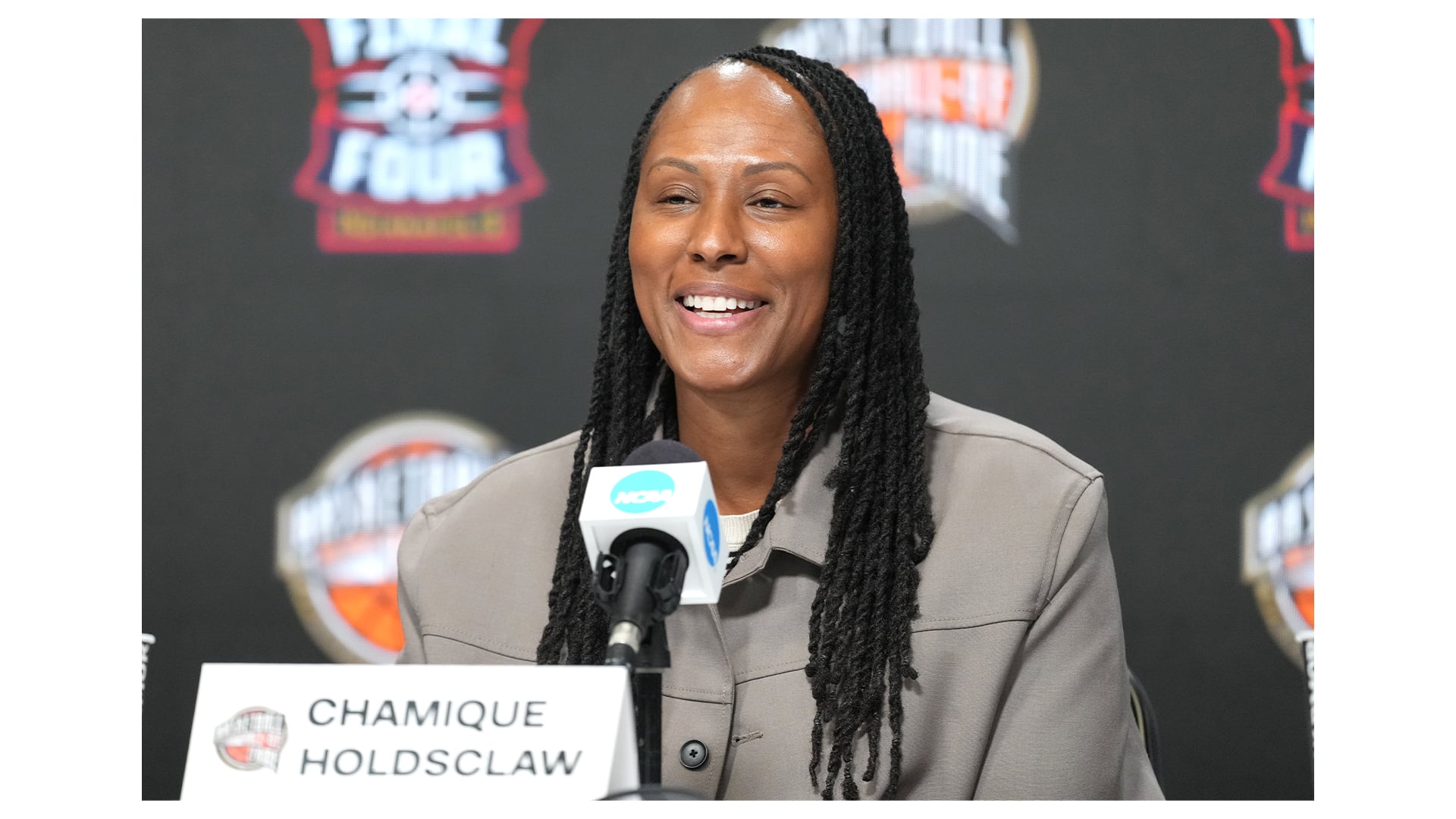
“The young kid, I was just really locked in,” Holdsclaw tells SLAM in early May of 2026. “I knew basketball could take me someplace. I didn’t know where.”
The game ended up taking Chamique Holdsclaw to a lot of places she had never been before, and in turn, she ended up taking the game to a lot of places it had never been before. She went from a kid in Queens to a national powerhouse college in Tennessee. She went from the Lady Vols to the nation’s capital. She went from D.C. to Spain and Poland. From those international cities, she also went on to play in Los Angeles, Atlanta and San Antonio. With her, all around the globe, she carried an unstoppable will to score the ball, an unending desire to ask questions, an unshakeable discipline to get better and an unquestionable impact on young fans. Testimonies from greats past and present confirm how much the game of basketball benefitted from Holdsclaw’s contributions. The game hadn’t really experienced a young woman as culturally relevant as Holdsclaw. Right from the jump, she helped to spread inspiration without even trying to.
The whole city knew about her as a high schooler. Stamped by multiple future pros (Lamar Odom, Ron Artest, God Shammgod, Felipe Lopez, Erick Barkley), Holdsclaw had Christ the King on tilt every game later on because she translated her observational eye into her on-court skill. But her time at C.T.K. didn’t exactly start at the top.
“It [was] sort of, like, getting people on pace with the vision,” Holdsclaw says. “When I was younger growing up, I watched the Lakers with my dad, right? On a thirteen-inch [T.V.]. I remember sometimes color, but I have vivid memories of a black-and-white on the table. I fell in love with the movements of Magic Johnson. That’s one of my earliest basketball memories.
“I was like, how tall is he? I remember my dad was like, ‘He’s the magic man, he’s 6-9, he can do it all.’
“I always thought because I’m one of the tallest girls, doesn’t mean that I have to play inside,” Holdsclaw goes on. “Like, I want to dribble the ball, I want to bring it up the court. At first in high school, because a lot of people don’t understand, Christ The King, I played summer ball with my classmates and then Mr. Cannizzaro moved me straight to varsity, so I sat the bench.”
Vincent Cannizzaro coached the C.T.K. girls team for 19 seasons, winning 16 consecutive Brooklyn Diocesan titles, 12 New York State Catholic High School and 10 consecutive New York State Federation championships. By the time Holdsclaw met him, the retired NYPD detective was already a legend with nearly three decades of coaching experience.
“I didn’t really play,” she goes on. “I got in when I could, right? They have me playing a 4. I’m getting in practice, I’m getting knocked out by, like, a 200-pound post player. I’m a really skinny kid and I was just like, ‘I hope they understand that I don’t wanna play inside.’
“So what I taught myself, as soon as I got the chance to play, I was like, you know what, I’m gonna get the rebound, I’m not waiting for the guard. I’m just gonna go up the court. I think that was the challenge for me. Figuring out if they were gonna let this fly and I’m lucky that my coach, Mr. Cannizzaro, realized the value in that and allowing me to have my versatility and blend my personality into the game. I was like, ‘Yo, Mr. C, by the time they’re passing the ball to the guard, I’m up the court. And we had that quick conversation, and then he started to let me play more freely because it was successful.
“But we gotta remember it was at a time where that wasn’t something that we really saw in the women’s game. To kind of tap on his legendary coach, you know, because he was winning. He didn’t really need me. They were still winning state championships all those years. To be able to adjust and adapt, that just shows how great of a coach he was, and I’m glad that I spoke up for myself in the most gentle way as a young person.”
It’s a good thing she did speak up. Her vision came true. She led the Royals to four state championships and only lost four total games while at CTK. That’s why those future pros respected her. All she did was win.
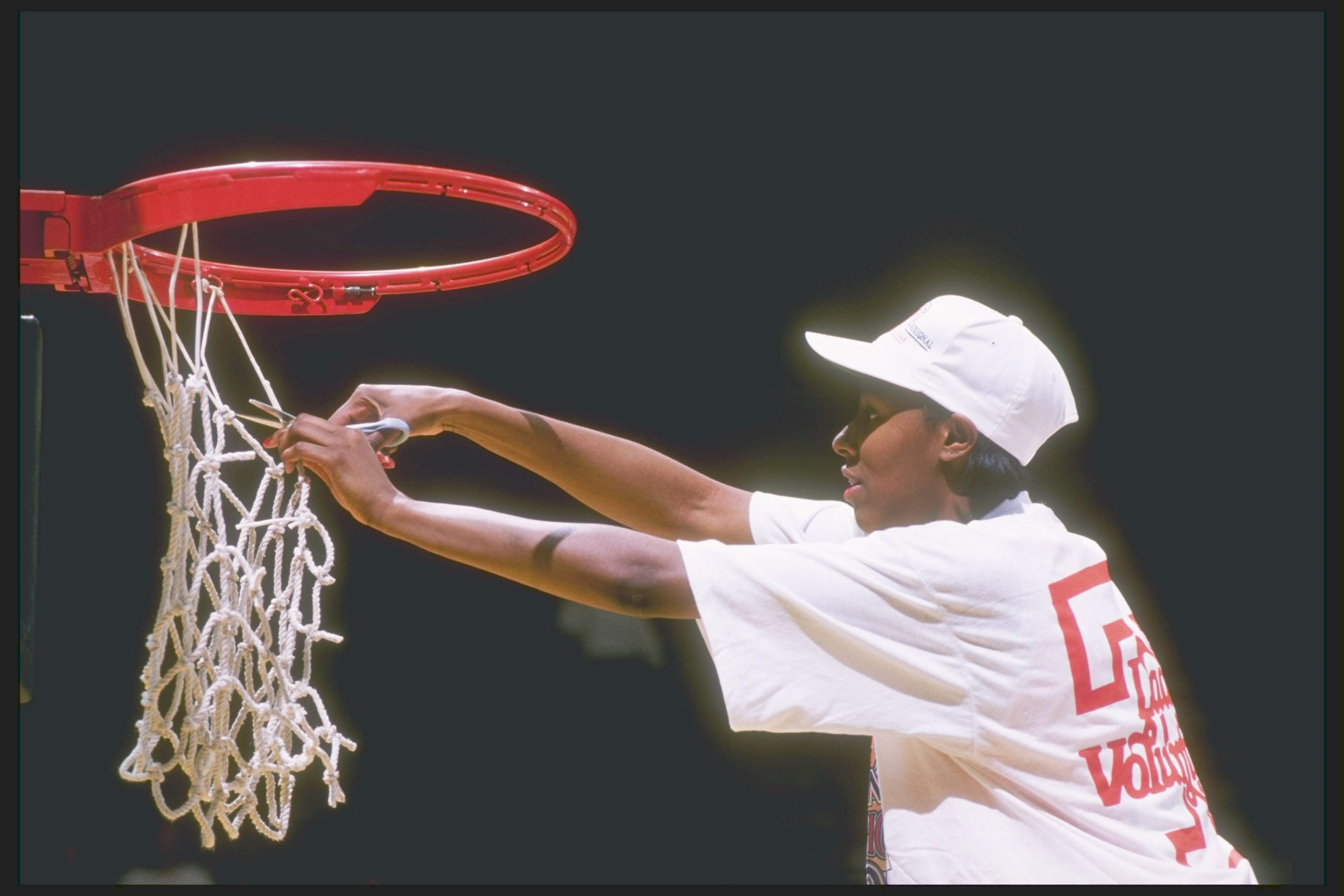
The whole country quickly caught on to what New York already knew. She was in the heart of the nation’s adoration while winning three consecutive national titles at Tennessee. Must-see T.V., so emphatically good that she was the Naismith College Player of the Year twice. Flowing down every court, attacking the rim, drilling midrange after midrange after midrange shot. The Vols were extremely fun to watch. Agility incarnate all over the roster. They pulled in audiences every time they played. Who wouldn’t want to watch a revolutionary undefeated college squad that could bolt around the floor and make opponents look like little kids?
Lost in the flash of the thousands of camera lightbulbs encircling the Vols was their appreciation of the fundamentals. As Holdsclaw confirms, that insanely entertaining squad valued self-sacrifice and maturity.
“First, we had the G.O.A.T. coach,” Holdsclaw says. One time for the iconic Pat Summitt. Two times for the iconic Pat Summitt.
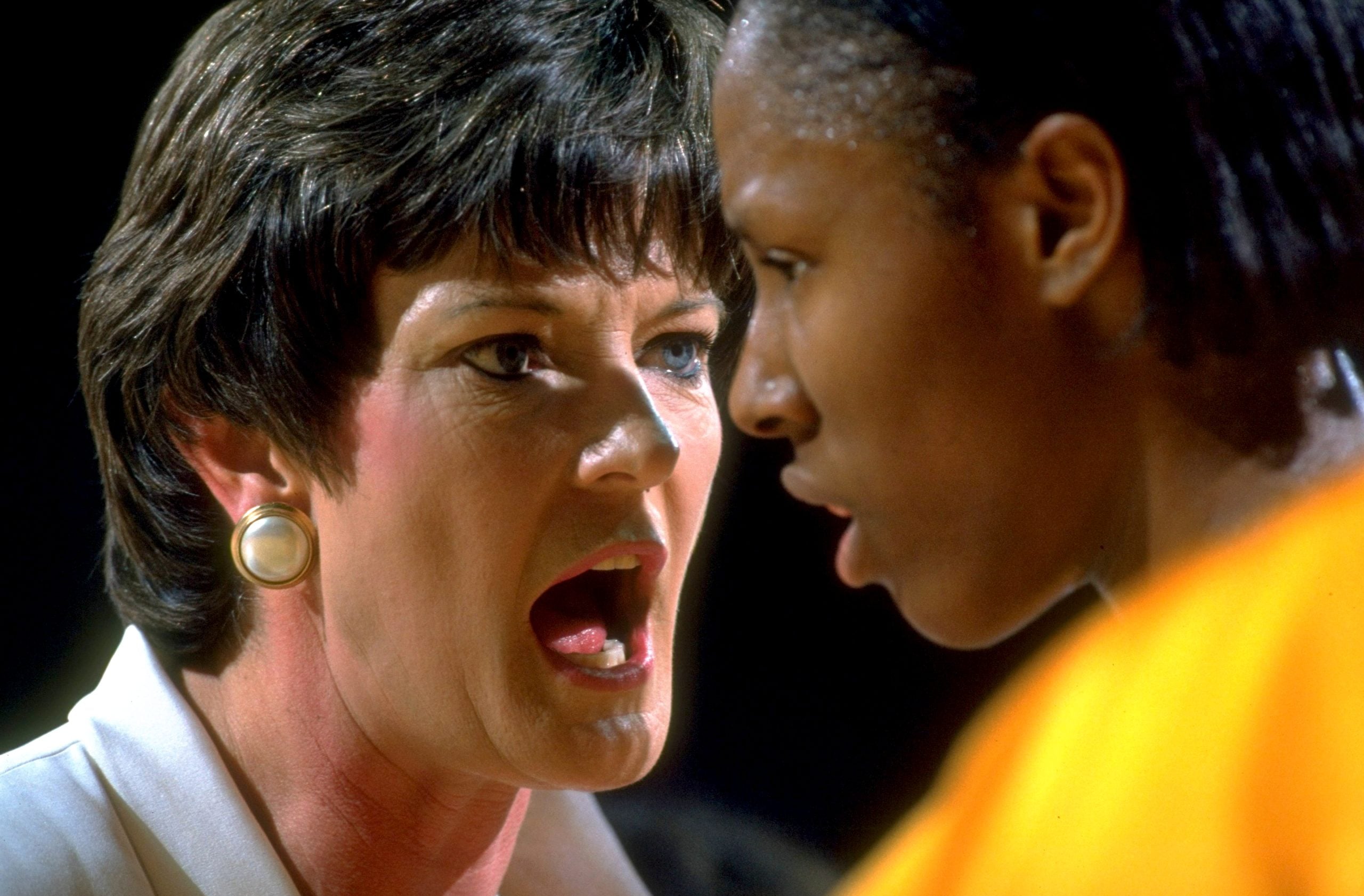
“We had this is crazy athleticism,” Holdsclaw says. “Some of the years we had players that could play multiple positions. My undefeated season, I was with Tamika Catchings, Semeka Randall and we played pretty much positionless basketball. We were all interchangeable. And then it was just an unselfishness. When you get to a higher caliber and have such great players, a lot of people run into those issues; they don’t want to share the ball. Man, we would share it. Because we knew once we had the success, everybody was gonna get shine.
“I will say secondly is that we knew what we had to do. We had the blueprint because Pat Summitt was one of the greatest coaches ever. We bought in so much that we were like, ‘Man, we gotta coach ourselves. We got this.’ We could figure it out and process things. We were at a higher level as far as thinking the game, so I would say, like, the educational piece.”
Learning is one of the secrets to Holdsclaw’s success.
“I’m one of those people, like, knowledge is power,” the incoming Hall of Famer tells SLAM. “I don’t always get it right, but I’m very humble, in a thought process of me having to read and process things, ask questions if I’m not great at something, and I think as a young kid, I was the same way. Even now in my life, I do a lot of public speaking, talking about mental health, and I’m always asking people certain things I don’t get. Or how I can reach a certain demographic or group? I want to learn more. I want to do better. I’m always reading stuff to empower myself.”
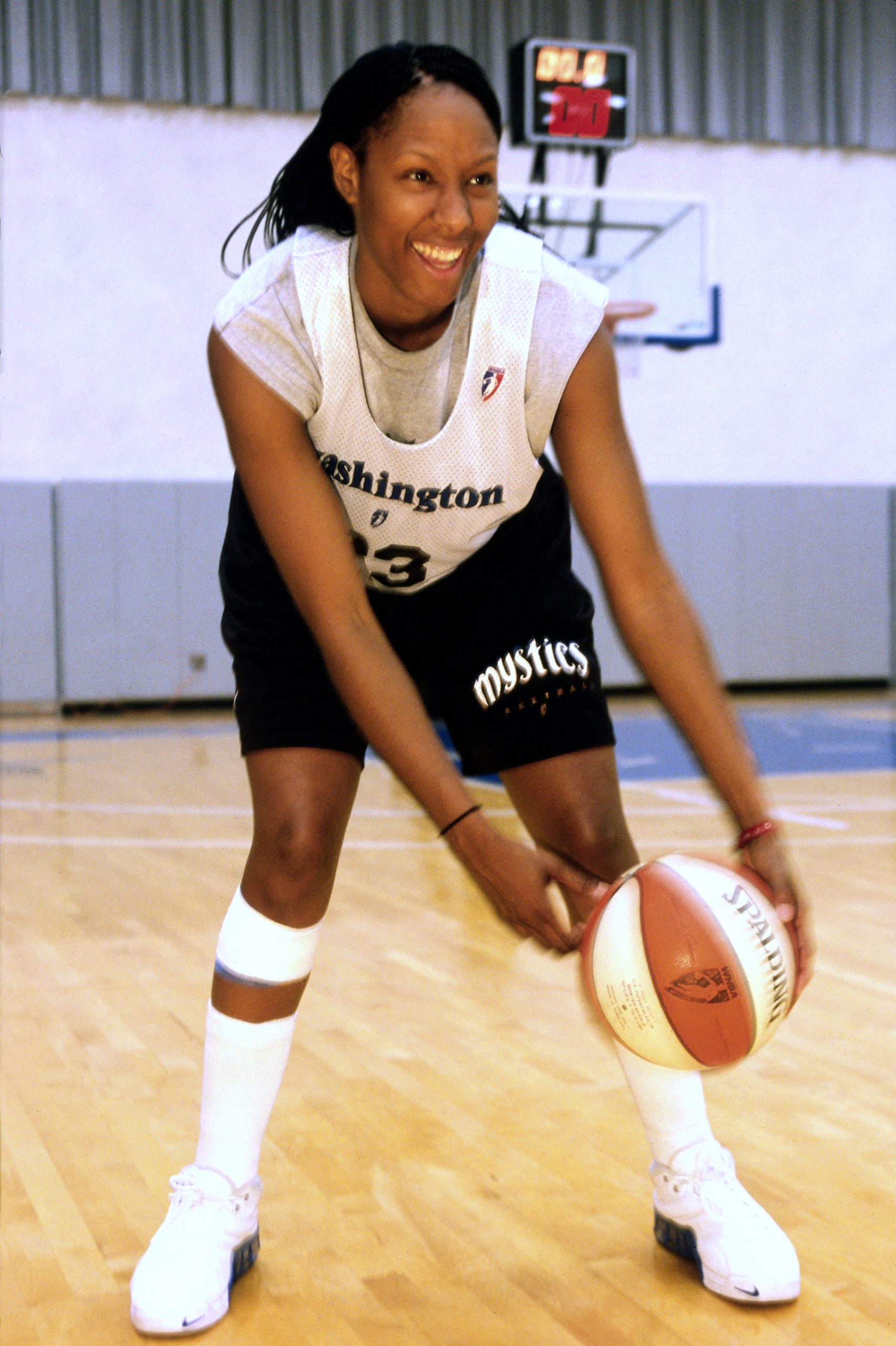
Back when she was still hooping, opponents had a lot to read about in the Chamique Holdsclaw scouting report. The number one pick in the 1999 WNBA draft, Holdsclaw got to D.C. with a pro-ready game. In her own words, she was a big guard who could do a bit of everything. That’s true. Everything consists of winning the ’99 Rookie of the Year award, making six All-Star Games, making three All-WNBA teams, winning two rebound titles and the ’02 scoring title, all while averaging 17 points, 8 rebounds and 3 assists over a decade-long career. Her six seasons in D.C. are marked by overarching averages of 18 points and 9 boards a game. But zoom in to the final three seasons she spent in Washington and her prime gets accentuated by the following:
In 2002, she went for 19.9 points and 11.6 rebounds a game, on 45 percent from the floor. In 2003, she went for 20.5 points and 10.9 rebounds a game, on 42 percent from the floor. In 2004, she went for 19 points and 8.3 rebounds a game, on 40 percent from the floor. The work worked.
Holdsclaw’s success was evident in the moment. The Rookie of the Year award and the All-Star nods confirm that. A different type of success was just a little slower to take shape. It’d be a few more years down the line that two of the greatest ever—Candace Parker and Kevin Durant—would make it known just how inspirational Holdsclaw was becoming. Parker famously followed in Holdsclaw’s footsteps to the University of Tennessee. Durant was a kid in the D.M.V. when Holdsclaw was out there draining the calmest, most exquisite middies. The Hall of Famer couldn’t have known then that she was serving as fuel for the next generation. She just remembers her time in D.C. fondly.
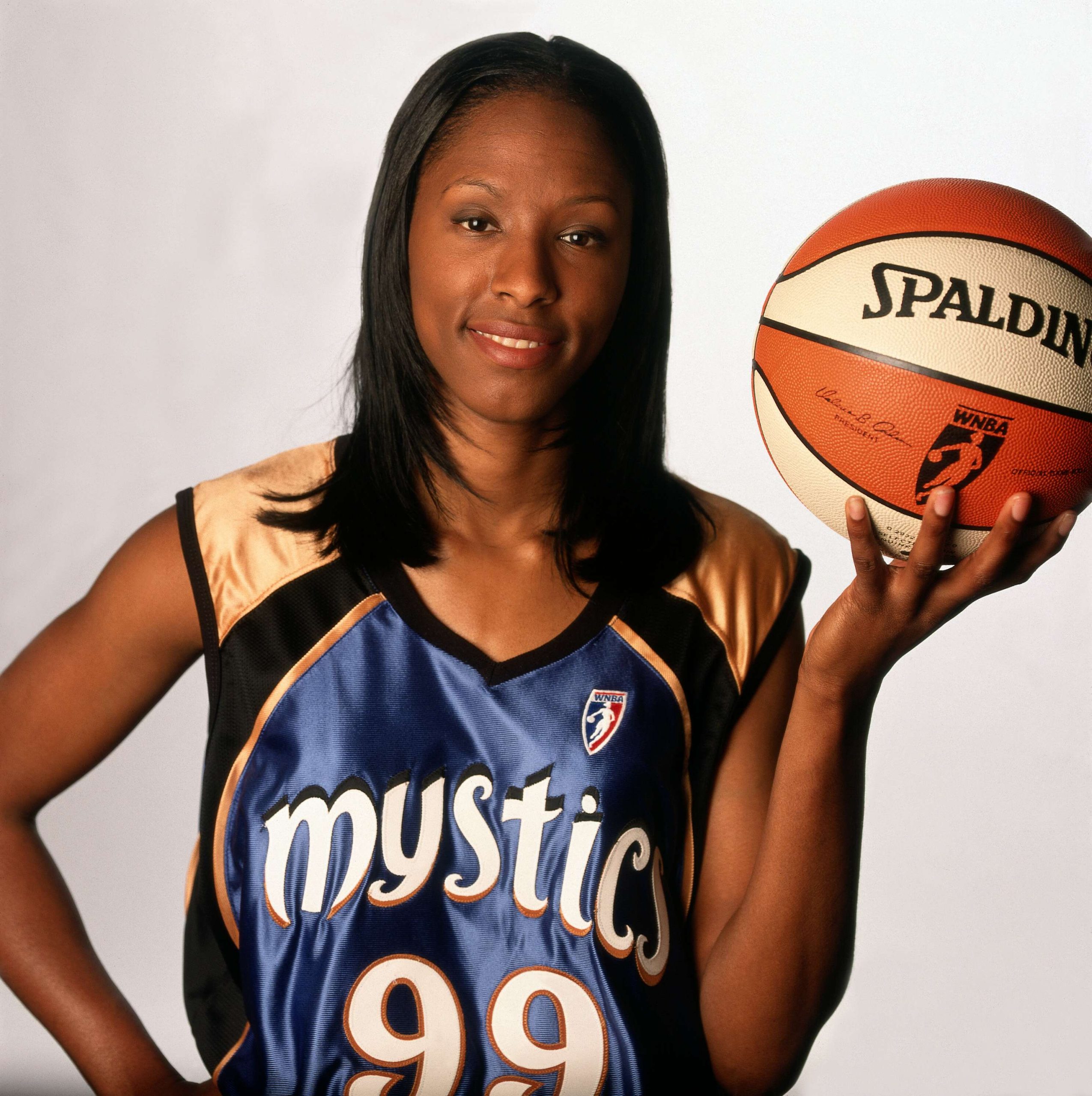
“Oh man, I had so many good, good times. As far as the game, I think we had just a great group. Every year that I played in D.C. it was just a great group,” Holdsclaw says. “We were just having a good time. Darrell Walker, he brought fun to the game because I remember they had fired a coach and D. Walk was hired. He’s a good friend of Michael Jordan. That’s when Michael Jordan was the president [of the Wizards]. He taught us how to be pros. I will say in D.C. that’s how I learned how to become a pro. It’s really getting in there, getting the work done. He’s like, ‘One hour, we’re gonna practice, run through our stuff and be ready. It’s your responsibilities to take care of your bodies and do what y’all need to do.’
“And we were like, oh my God. Everybody was kind of shocked because most of the coaches up until that point were college coaches and we were having, like, three-hour practices and it wasn’t sustainable after playing overseas. So yeah, D. Walk. He’s one of the first people that after family that I called to tell that I made it to the Hall of Fame.”
What was his response?
“About damn time,” Holdsclaw laughs.
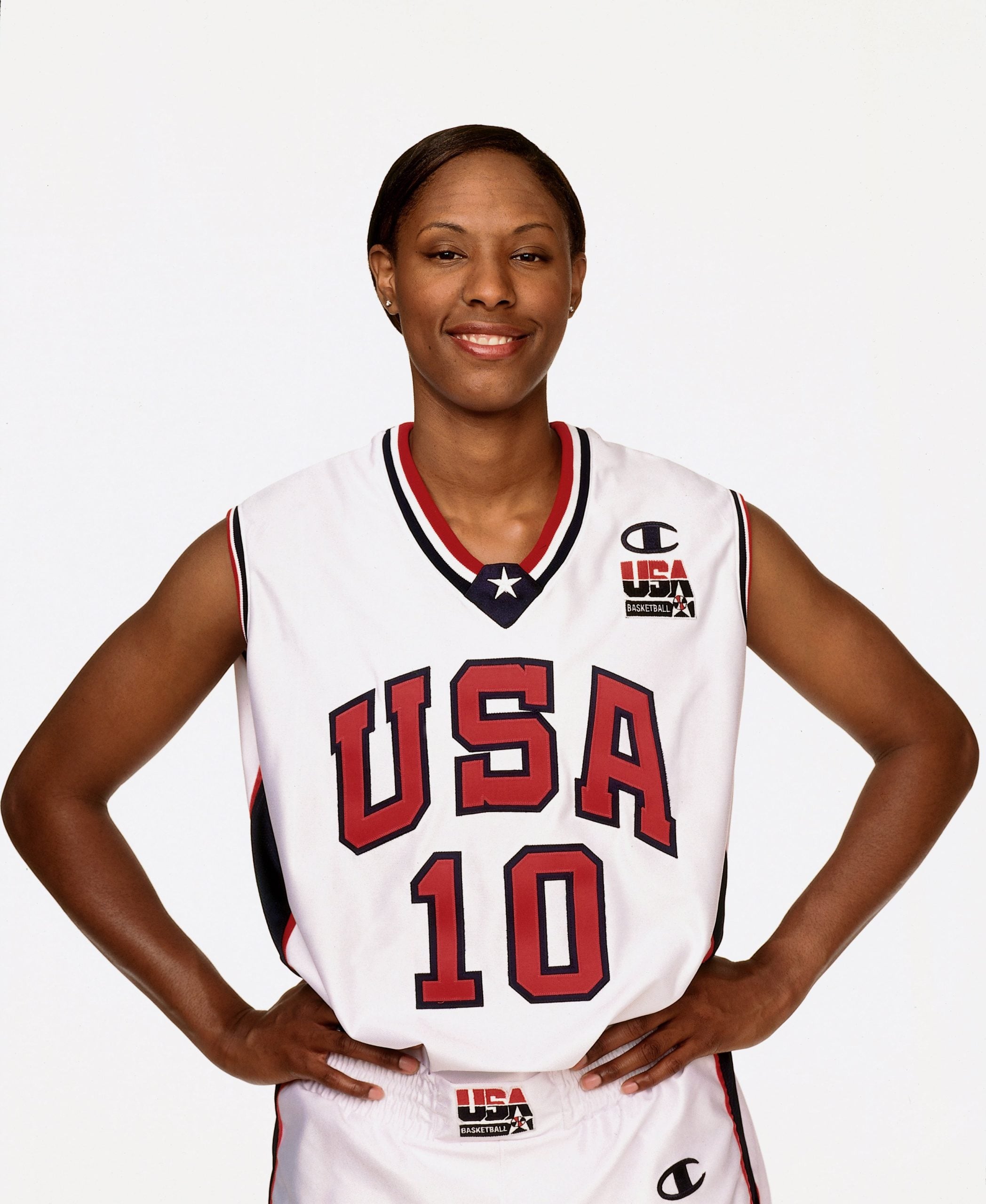
That’s facts. As mentioned, Holdsclaw went on to play overseas and for three other WNBA teams. Her last season was 2010. The Basketball Hall of Fame honor has arrived, albeit much later than it should have. Especially when Holdsclaw’s contributions to Team USA are considered. She was a key member of the squad that came back from Sydney, Australia with the gold medal in 2000.
“When you get to experience something like the Olympics, you’re like, ‘Damn, I really did this. I’m one of the best in the world, representing Queens, New York. I did this. This is a lot.’”
After much deliberation, she counts winning that gold with Team USA as her favorite on-court accomplishment.
“Winning a gold medal, because you’ve been best in your city, state, but to be tops in the world to add to that…” She goes on considering. There are, after all, a lot of on-court accomplishments to consider. “…And I, what else do I think? I think it’s… man, I just—it’s so many great moments… That three-peat at Tennessee was special, but I… I would probably say, to be an Olympic athlete, that’s gonna be the best.”
With all that athleticism at her disposal, Holdsclaw often chose to employ the knowledge she had worked so hard to attain. Watching her career play out over the years turned into a physical seminar on thinking the game. All those questions she asked of other players, from God Shammgod in N.Y. to Steve Francis in D.C. to Becky Hammon in S.A., they culminated in the end to make a supremely talented athlete into one of the best basketball players ever. Basketball. Player. Forget a position. Forget convention. This was a ballplayer, a hooper that won games and titles. Chamique Holdsclaw captivated the whole country by working, thinking and being herself, on and off the court.
She was being so true to herself that it didn’t even feel special. It just felt like normal life until she was about 25 years old. It had already been multiple years since she had burst onto the national stage before the concept of the Hall of Fame even crossed her mind. And it only did so because another basketball visionary pointed out the certainty of her making it to the halls of forever. Chip Engelland used to train Holdsclaw during her playing career. Engelland’s most known for being the shooting coach of the Spurs dynasty and he now works for the Thunder. He’s got three NBA championships to his name. The man knows ball.
“Man, honestly, to be quite frank, I never even thought about it,” Holdsclaw says about making the Naismith Hall of Fame. “And one day [Chip and I are] in this gym in West Tennessee, and he goes, ‘You know you’re a future Hall of Famer?’ And I was like, oh really? First time that that that was in my head. I’m like, oh, Hall of Famer. I didn’t really think about it any during the rest of my career and I feel like once I retired and moved on in life, that’s when I started getting hit with the calls from reporters every year; ‘Do you think you should be in the Hall of Fame?’ Of course I’m not responding for them because it doesn’t matter what I think, right? I mean, someone votes on it. I used to say when you’re in it, when you’re playing, it’s so many thoughts. I’m worried about training, condition. Things are happening so fast, right? And so once you get older and that chapter is over and you’re like, oh sweat, man, that would be nice if I did that. That would kind of cap off my sports career.
“So that’s what it feels like. It’s like, oh my God, that was an open story, something that was open and now I can finally close it and be amongst basketball’s greatest, right? The elite group. It’s a big thing, especially how this story started for me.”
It started as that little kid, playing against all the boys, crafting a jumpshot to somehow score over them. The story saw her win everything in high school, nearly win everything in college and it saw her become an international pro whose impact on the generation of kids watching her, in turn, helped them become legendary. It saw her, Chamique Holdsclaw, get inducted into the New York City Basketball Hall of Fame, the Women’s Basketball Hall of Fame, the Tennessee Hall of Fame and now the Naismith Hall of Fame.
“Chamique made the Hall of Fame, did she?” the trees ask again.
“A pair of young girls were talking about it just yesterday,” the asphalt answers. “They were proud. So proud.”
The whole park passes around celebrations like a basketball being dished during a shell drill in practice at C.T.K.
“I always knew it, from the very first step. The things she carried when she moved… it was that dedication, that purpose, that wisdom, that love. I could feel it in her walk,” the asphalt says.
“When all those guys would come stand by the railing here,” the East River jumps in, “they would all whisper to each other. They couldn’t figure out how to stop her. They didn’t want nobody to hear them say it, but they said it every day. They would try to cool down and try to understand what she had done, the work she had put in to never miss a jumpshot.”
“It wasn’t just by you,” the wind says to the water. “I fly all over this city and from the north Bronx to east Queens to south Brooklyn, they would talk about her, praise her. And every time one of those kids with the big names and the big games would play against someone not from New York, they would tell those players about her, about her skill, about her tendency to bring people together. I would meet up with breezes from out west every now and then and her name would come up. They were all talking about her, the whole country, and how she was shifting the paradigm while she was also shifting defenders.”
“So she really did become a beacon of hope, a light forward for all?” the trees ask, already knowing the answer.
And the wind and the rims and the asphalt and the East River confirm that Chamique Holdsclaw became exactly who the very land, the silent guardians of the court, the keepers of the game’s past, the spectators of the game’s future, always thought she would be, back when she was just the little kid playing ball at Astoria Park.

Photos via Getty Images.