Mexico Native Karim López Details His Journey from Australia’s NBL to NBA Lottery Hopeful
This story appears in SLAM 260. Grab your copy now.
“Fearless.”
That’s how Karim López—the hoop-addicted teenager who has been labeled the most intriguing international prospect in the 2026 NBA draft class—defines his on-court methodology and approach. And by every ball-don’t-lie metric, he’s telling the truth.
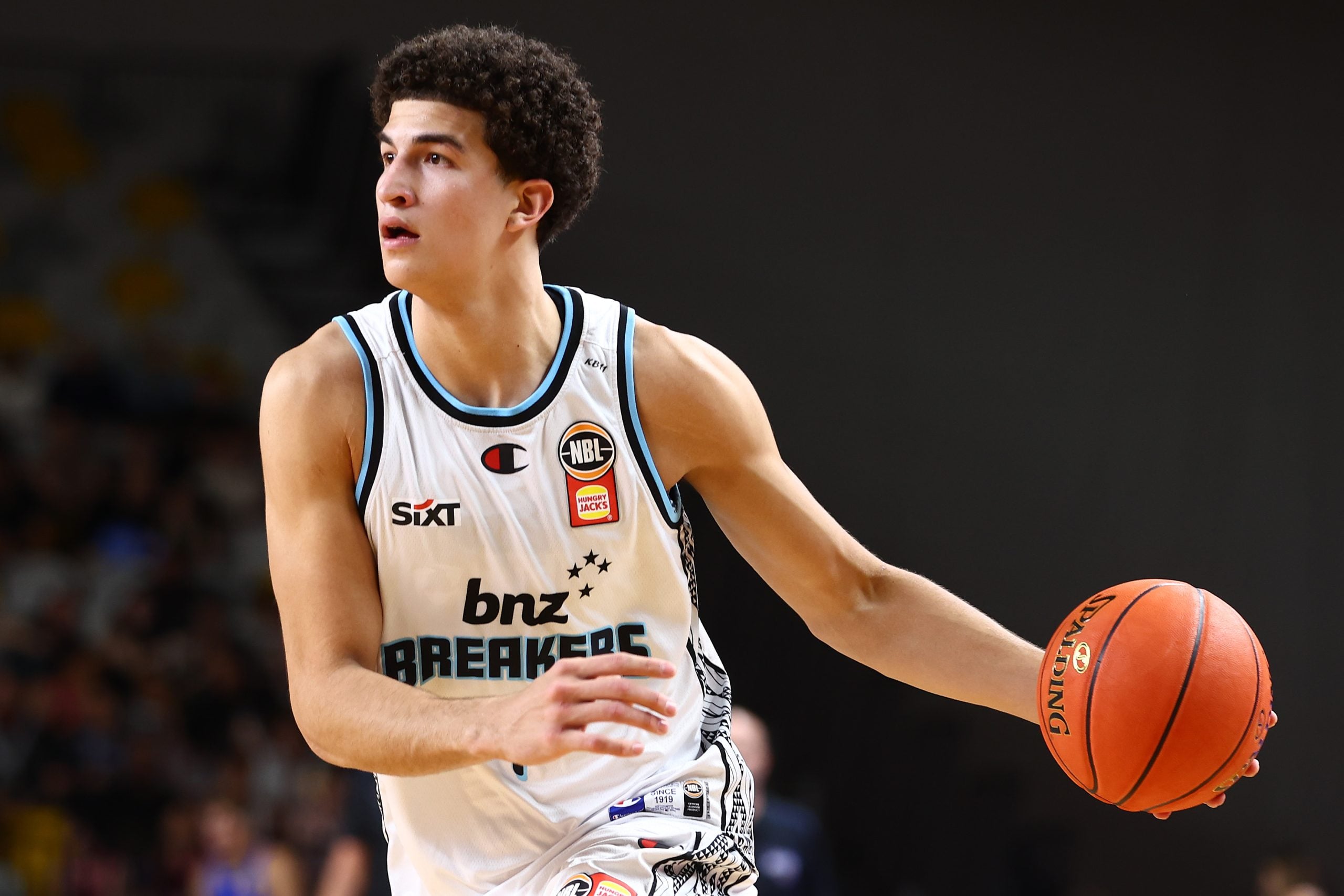
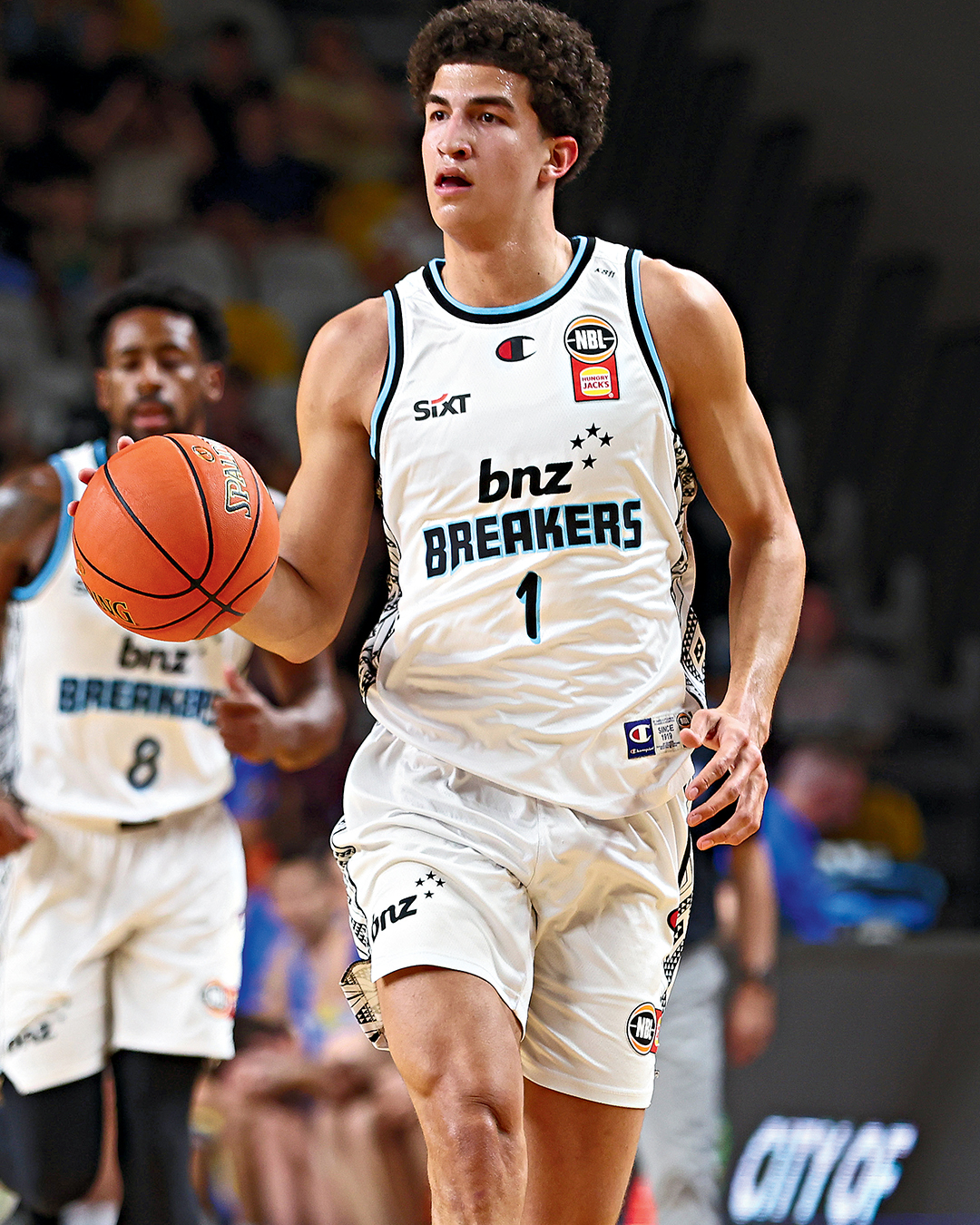
Currently, López is a stalwart for the New Zealand Breakers of the National Basketball League in Australia. As one of only four active prospects in the NBL Next Stars program—the same development cadre that groomed high-profile lottery picks like LaMelo Ball, Josh Giddey and Alex Sarr, and which has produced among the most NBA rookies (14) of any professional basketball league on the planet since 2019—López is especially rare and beguiling. He’s a wing who can put the ball on the floor; a cloud-touching, rebound-seeking missile; a player who, à la his idols Kevin Durant and Kobe Bryant, never backs down.
The bullish, high-motor 18-year-old is coveted for his stretchy length on defense and for his downhill strides on offense. At 6-8, 220 pounds, López is a true force, crashing, banging, gliding and high-jumping his way toward season averages of 10.6 points and 5.6 boards, to go along with one steal and one block in 24 minutes per contest as a sophomore. In his two years with NBL Next Stars (due to age restrictions, he hasn’t been able to declare for the draft until now), he has become a poster boy—literally—for the Aussie league.
Here’s the real kicker: This summer, he’ll likely become the first Mexican-born lottery pick in the NBA’s nearly 80 years of existence. López is representing Mexico’s game on the international stage in ways that the oft-overlooked North American nation has never known.
That is, everything in the Mexican basketball multiverse is about to shatter in real-time with the arrival of López.
Hailing from Hermosillo, Sonora, a city with nearly one million residents, located 175 miles south of the Arizona border and most famously known for inventing the bacon-wrapped Sonoran Dog, López bypassed the traditional life path for the average Hermosillense. Instead, he learned to dribble and shoot during his childhood.
It helps that his dad, Jesús Hiram López, is a former Mexican national player and professional hooper himself, with coaching experience. The senior López played for teams throughout Mexico in Hermosillo, Cancún and Xalapa, and has naturally been a major factor in Karim’s basketball upbringing. Even today, the two López hoopheads work out together, discuss strategy and motivate one another.
“He got me into the game [early on] by taking me to practices,” Karim recalls from his apartment in Auckland, a 20-hour flight away from where he grew up in northern Mexico. “That’s how I got in love with the game. Seeing him throughout the years, him giving me advice and training me to get better. We still get in the gym together after practice or on an off day.”
The training clearly paid off. As a blossoming teen in a professional league full of grown adults, the Gen-Z López has already proven that he’s KarHIM (a nickname his online believers have bestowed upon him). After grinding his way to the top of the global basketball circuit under the tutelage of his father, he’s in a position to dictate Mexico’s basketball future, and, by all accounts, he looks ready to make his mark.
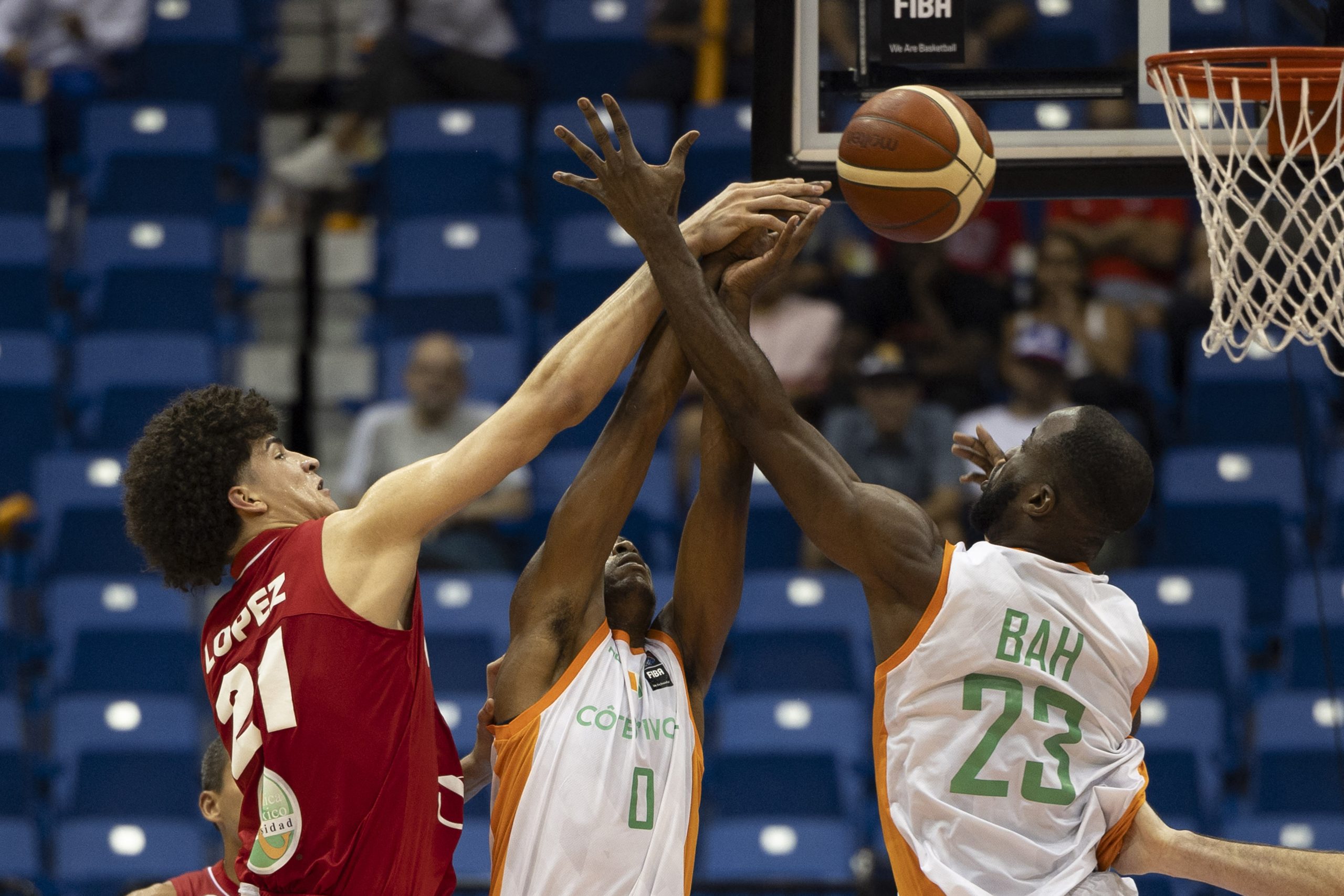
Here are the factuals: last year, in his rookie campaign, López became the youngest player in NBL history to notch a double-double. He holds the NBL record for most points scored (19) in regulation time for a player under 18 (a record he has achieved more than once). Beyond the NBL, López has shone in international competitions. He led the 2023 FIBA U-16 Americas Championship tournament in scoring at 20.5 points per outing, and he has also made impactful appearances for Mexico’s senior national men’s squad as one of the country’s youngest hoopers. Today, he’s the nation’s unequivocal marquee draw and future centerpiece. (López initially suited up for Mexico as a 15-year-old; for context, NBA player Jaime Jaquez Jr debuted with Mexico as a 19-year-old.)
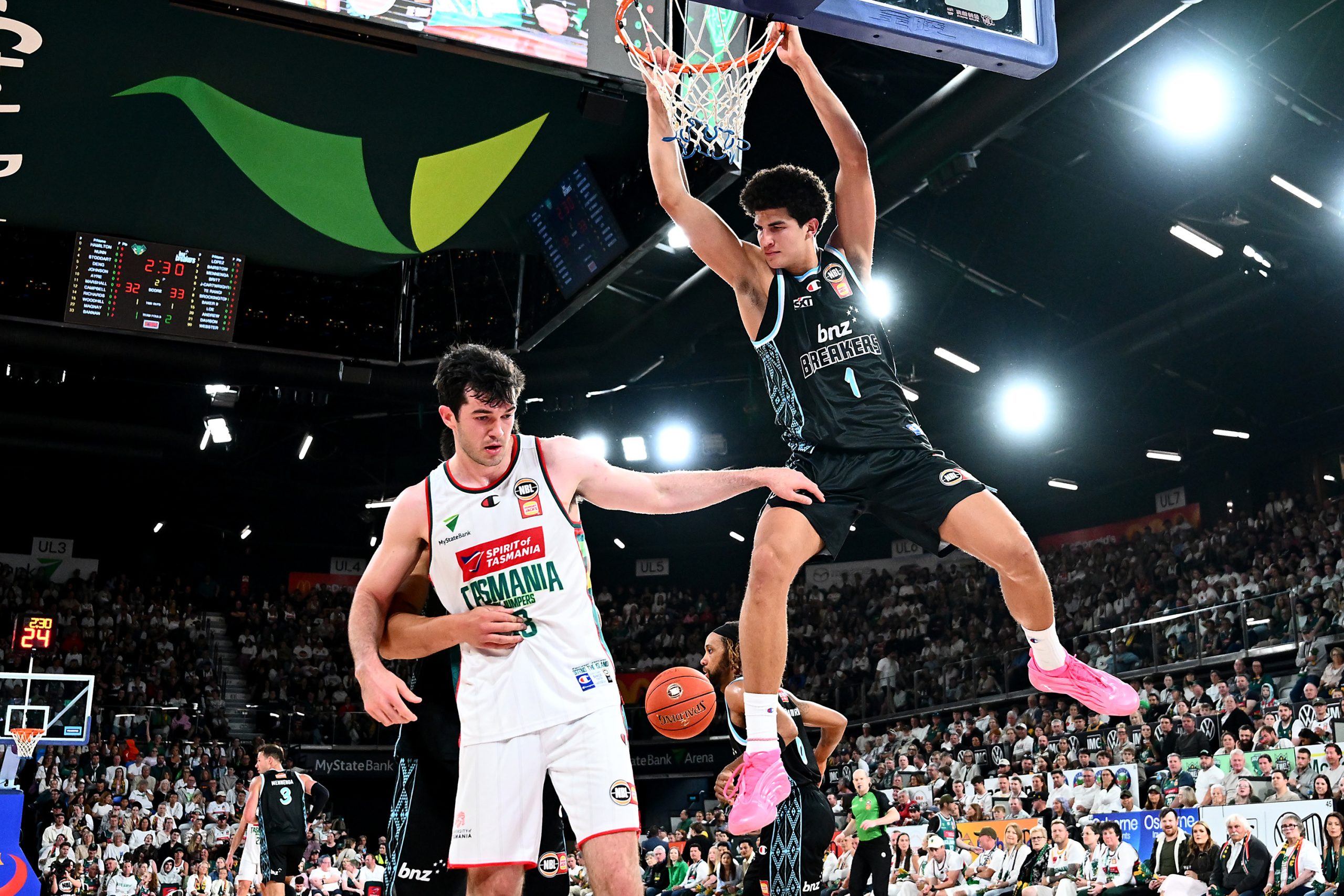
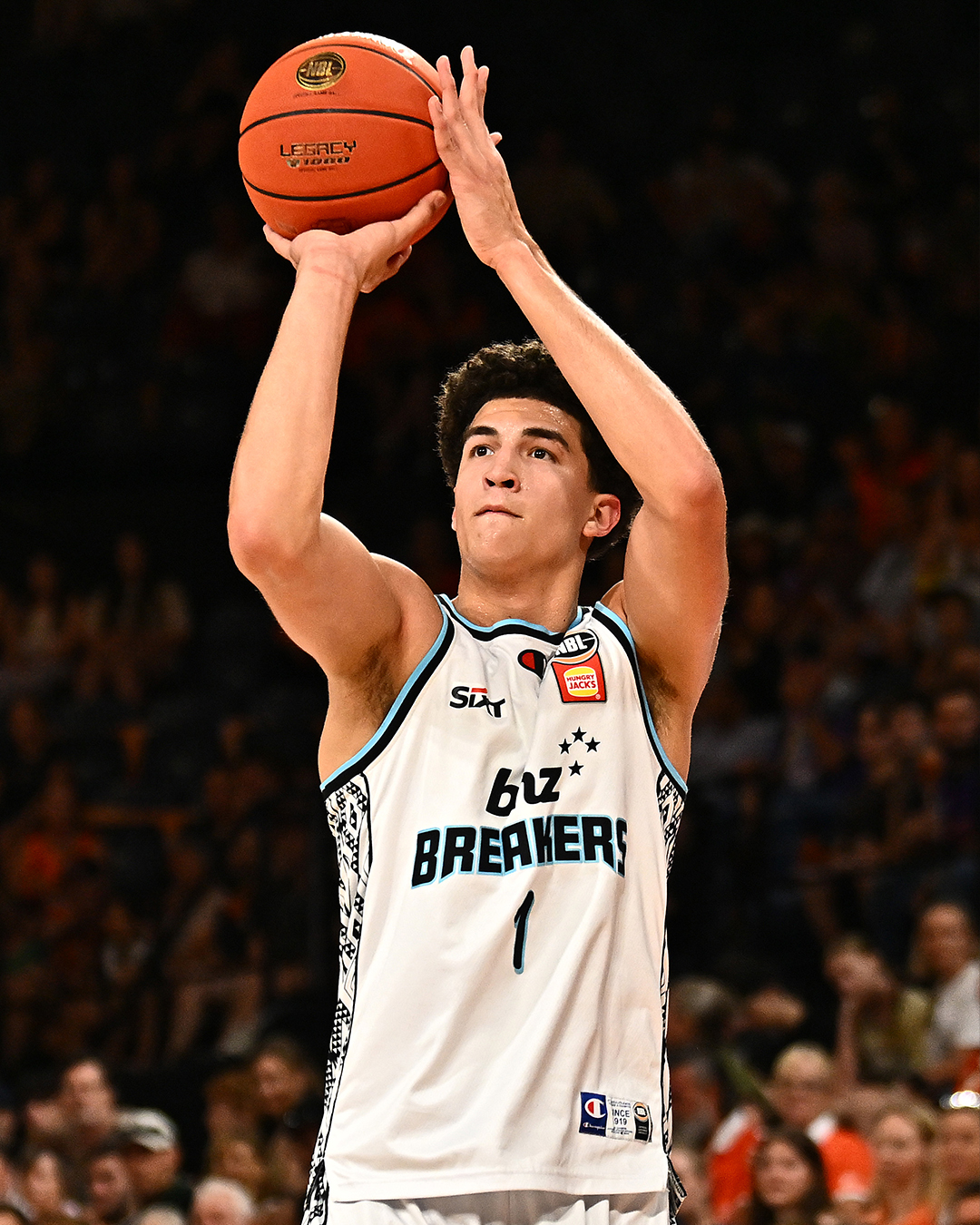
Recurring things you’ll notice while watching López in any game he’s in? Chasedown blocks at the rim, proceeded by dunking on a defender’s cabeza on the opposite end, all of it punctuated by lots and lots of flexing and staredowns. There’s a mix of behind-the-back dribbles (always impressive to see from a large, athletic forward) and Euro-steps to the rack. López isn’t an elite outside shooter—yet—but he has shown glimpses; earlier this season, he splashed 40 percent of his treys on 3.2 attempts during the opening 14 games, and last year as a rookie, he peaked at 43 percent from threelandia in his final 11 games on 35 attempts, per Sports Illustrated.
Beyond the raw numbers, there’s an undeniable titanium to his game, the kind of unbreakable moxie and conviction that only develops under the pressure of being your country’s legitimate shot at global basketball exposure.
“Honestly, I always believed I was really good, maybe if I wasn’t really when I was younger,” he admits. “I always had that confidence that I was the best. So it was never really a dream. It was more of a goal for me.”
Despite having produced only four Mexican-born NBA hoopers to date—Horacio Llamas, Eduardo Nájera, Gustavo Ayón and Jorge Gutiérrez—the consecrated lineage of basketballers in Mexico isn’t as foreign or as recent of a phenomenon as the uninitiated might assume. Basketball in Mexico, as a community sport, is present everywhere; it just doesn’t regularly translate into the NBA. López is certainly the most adept and notable of the bunch, though he isn’t the first Mexicano to throw down on the hardwood.
Rewind to the onset of the 20th century, when basketball is said to have been introduced by an American missionary named Guillermo Spencer at the Instituto Metodista Mexicano in 1902. Three years later, the first professional basketball tilt went down in Puebla, the city and state in which an underequipped Mexican army once defeated French invaders during France’s second intervention, led by Napoleon III—on Cinco de Mayo, no less. Three decades later, Mexico won the Bronze medal in the Olympics.
Hell, let’s travel even further back on the timeline to understand the real extent of basketball’s origins in Mexico, to the Mesoamerican eon of 1600 BCE. Along the tropical, humid Gulf Coast, the Olmec civilization is believed to have established the earliest traces of society in Mesoamerica. It’s where the rubber roundball game known as Ulama was played as one of the oldest known sports. The Aztecs would later ritualize the competition, which was played using hips, knees and elbows, and involved getting the ball through a stone ring (sound familiar?) in an indigenous, ancestral game that is still currently played in parts of Mexico as a form of cultural preservation.
We’re talking Before Christ-levels of ballerdom. In this country, ball is life—sometimes in the strictest sense. The love for it flows deeper and wider than the Rio Grande. It’s among the most popular team sports to be played on Mexican soil, behind soccer and baseball. Drive around any sprawling city or thumbnail-sized pueblo in the republic and you’ll see the same thing: colorful, outdoor basketball courts in the least expected settings.
The thing is—preceding López’s ascension—Mexico’s hoop passion hasn’t been exported beyond its borders very much. There has never been a Mexican thunderbolt at the elite level, one of those touted blue chippers who the nation could be galvanized by and rally behind. Until now.
To grasp the magnitude of Karim, understand that he’s been getting props from Hall of Famers like Carmelo Anthony, who met with the Sonoran teen and praised him for “chang[ing] many narratives” regarding Mexico’s basketball legacy. Melo celebrated López’s success in the NBL, a league that has transformed into one of the most formidable pro routes around, irregardless of hemispheric coordinates. So far, López seems properly built and equipped to handle the pressure.
At age 14, Lopez left his hometown in the Mexican desert to play for Club Joventut Badalona in Barcelona, Spain, where he stood out and was promoted to the adult unit. (Joventut Badalona is notably the only Spanish basketball franchise besides Real Madrid that has never been relegated from Spain’s top division, and it’s where former NBA standout Ricky Rubio began his career.) Before his successful stint in Europa, López won a state title and became a national U-14 legend in Mexico at 13 years old. And before that, he was just a kid who loved the game. In some ways, he still is. And he’s finding his way through it all.
“I realized I wasn’t delusional, that I had a real chance [to go pro], maybe around 13 or 14,” he says. “That’s when I started getting recruited and was getting attention from high schools in
the US, and I decided to go to Spain. Just the fact of living on another continent, in another culture [at that age], it made me mature faster. [I had] to adapt to survive basically.”
As a recent adidas signee, López is closer than ever to cementing a dream that no other Mexican-bred athlete ever has: getting his name called by the NBA commissioner in New York City as part of draft night’s opening overture, and etching himself into basketball mythology.
The long journey for López thus far has no doubt been uphill, but joyously steadfast, something that is evident in his boyish grin and the chuckles he emits whenever he’s off the court.
On September 16, 2022, Mexican Independence Day, a 15-year-old, babyfaced López posted a photo of himself rocking a Mexico national team jersey. The caption read: “‘Be patient…they’ll know your name’ 🥷🥷.”
Soon, more will certainly know his name. And then the real work begins. But you know what they say about Mexicans and hard work, right?
“Representing Mexico at the Olympics and [FIBA Basketball] World Cup, those are dreams to me right now. Those are goals,” the soon-to-be NBAer reveals. “The World Cup is next year. The Olympics are in two years. That’s big for me…It’s just a matter of putting in the work.”
Photos via Getty Images.