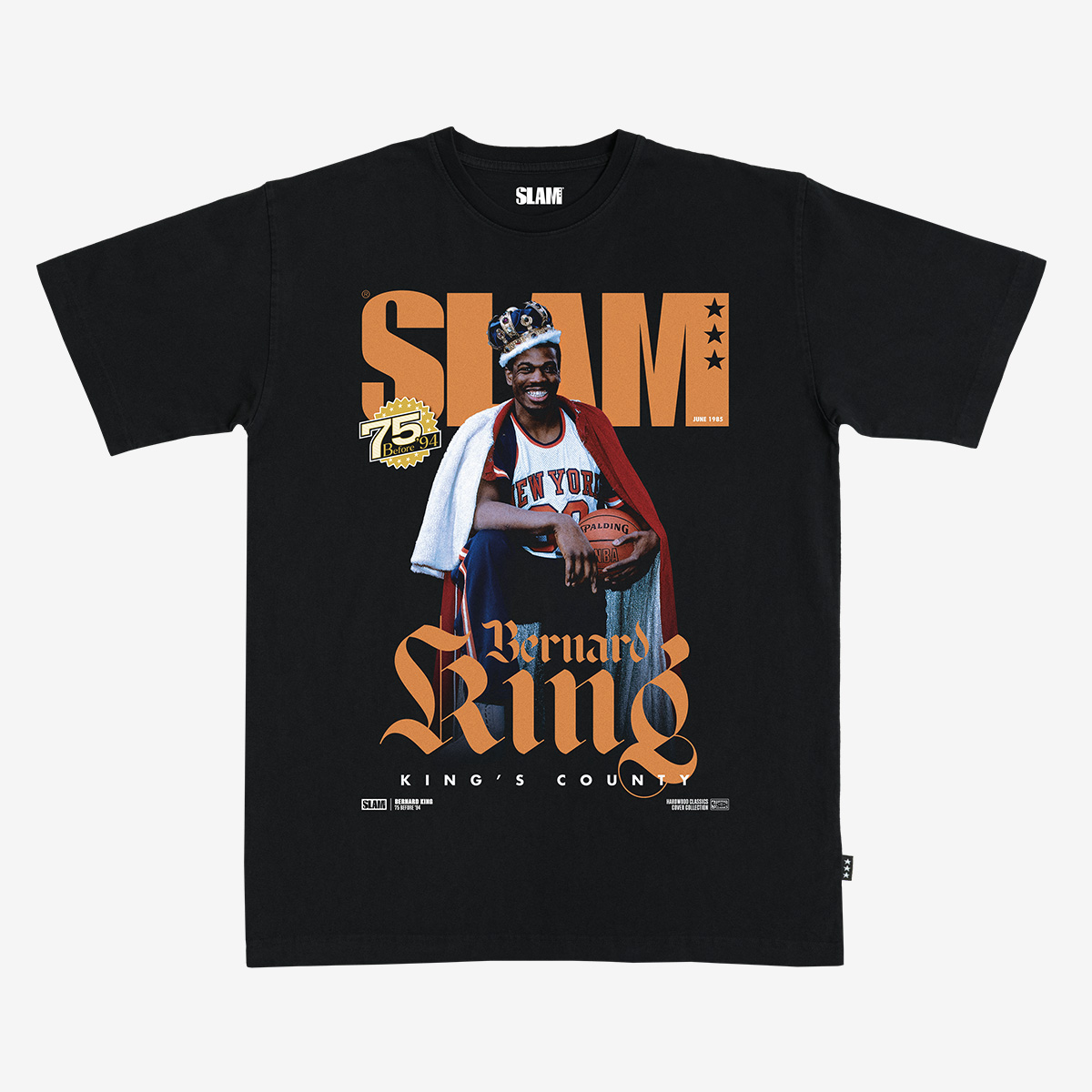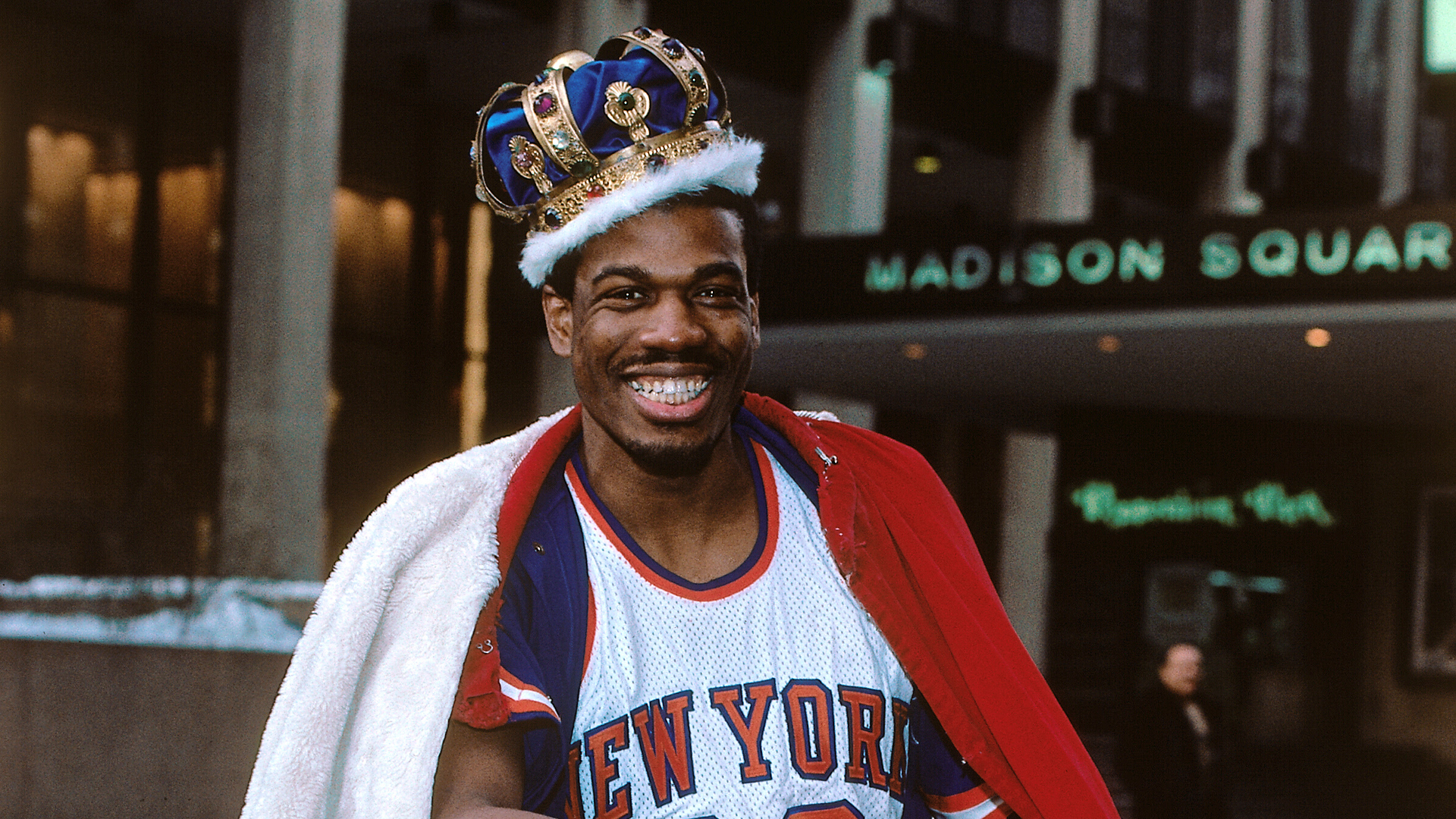
Bernard King, The King of King’s County and Knicks Royalty
Sure, we saw what Bernard King could do for his seven peak seasons before he tore his knee to ribbons, but just imagine what might have happened had he stayed healthy.At his absolute best, King was a hyperefficient scorer who could not be contained from 20 feet and in. He absolutely tormented frontcourt players tasked with guarding him and punished smaller rivals who thought they could overcome his power and skill with their quickness. The sight of King barreling down the wing, ready to pull up abruptly or put the ball through the hoop was thrilling for fans. King played for the Knicks when most fans were preoccupied with the Boston Celtics, Los Angeles Lakers and Philadelphia 76ers. He helped them win some playoff series, and had he not gotten injured, perhaps they could have joined that fearsome triumvirate at the top of the League. He certainly had their respect.“I don’t understand how Bernard does it,” Boston legend Larry Bird told The New York Times in ’84. “He’s in heavy traffic—guys all over banging him and waving their arms—and he gets the shot off, not just any shot but the shot he wants, and he cans it. Time after time. He’s the best scorer I’ve ever seen or played against.”King only played four seasons in New York, and he doesn’t have a ring to show for it, so it’s hard to install him in the franchise Valhalla with Clyde Frazier, Willis Reed or Bill Bradley, but when he was there, he was just so good.
 And even better, he was a New Yorker. King grew up in Brooklyn and was a playground fixture who played when getting to the basket, finishing through contact and never (ever!) backing down were how things were done in the City. That’s how he played as a kid, and that’s what he did as a Knick. King was special, and it’s funny that when the franchise honor roll is called, his name isn’t always heard. But King was never bitter or angry at his place in history. If not for that fateful moment in Kansas City when his life and career changed—he tore his ACL while trying to track down a Reggie Theus fastbreak—King might have been enshrined with those other Knick legends, championship or not.
He certainly had the requisite love for the city and its fans.
“I’m from Brooklyn, so I am New York,” he said after he retired. “It means everything to me having the opportunity to play here during my career with the Knicks, having grown up honing my skills in the city. I’ve seen it evolve, and I’m delighted to see where the game is at. New York basketball is everything.”
When asked for a highlight of his career, King was even more deferential to his home city.
“Just putting on that uniform in the locker room every night.”
Scorers have to shoot, but often, shooters aren’t accurate. That has been the way of the basketball world for decades. We tolerate the gunners because they can go on those insane, unstoppable hot streaks that dazzle fans.
King was never a gunner, even if he did lead the League in field goal attempts two times. He made more than 50 percent—and several times better than 55 percent—of his shots often during his career. Those kinds of numbers were usually reserved for the big men, who conducted business close to the hoop. Of course, they were going to hit more than half their shots. They were taking three-footers. That wasn’t King. Sure, he could power drive to the basket, but he shot spinners and mid-range jumpers and pull-ups and just about any kind of assault on the basket you could imagine. And he was hell on the fastbreak.
King would blast downcourt, his barrel chest leading the way and challenging any poor defending sap to get in his way. (Hint: They didn’t.) But when it was time to play in the halfcourt, and the three-point play was still a novelty, King would really go to work. When Rick Pitino was an assistant to Head Coach Hubie Brown, and the boss man would ask what play the Knicks should run, Pitino would say, “Give it to B.” Simple. Effective.
Highly effective.
But King wasn’t some sort of happy-time offensive machine. Few people worked like he did.
“The key was his preparation,” Brown said. “Already in college, he was the greatest practice player in the history of Tennessee basketball. He carried that work ethic over to the NBA. His game was 20 feet and down, and he got it to perfection.”
King would put up thousands of shots from what he referred to as his sweet spots. There were 22 of them: along the baseline, up the wing and in the lane. On both sides. Shut him down on one side, and he went to the other. Take away the lane, and he went to the wing. Shut down the baseline, and he posted up. He simply could not be stopped.
“I was not the most creative player,” King said. “I thought the game out. I was an analytical player. So, I developed this, and that’s how I shot over 50 percent for my career. That’s efficiency.”
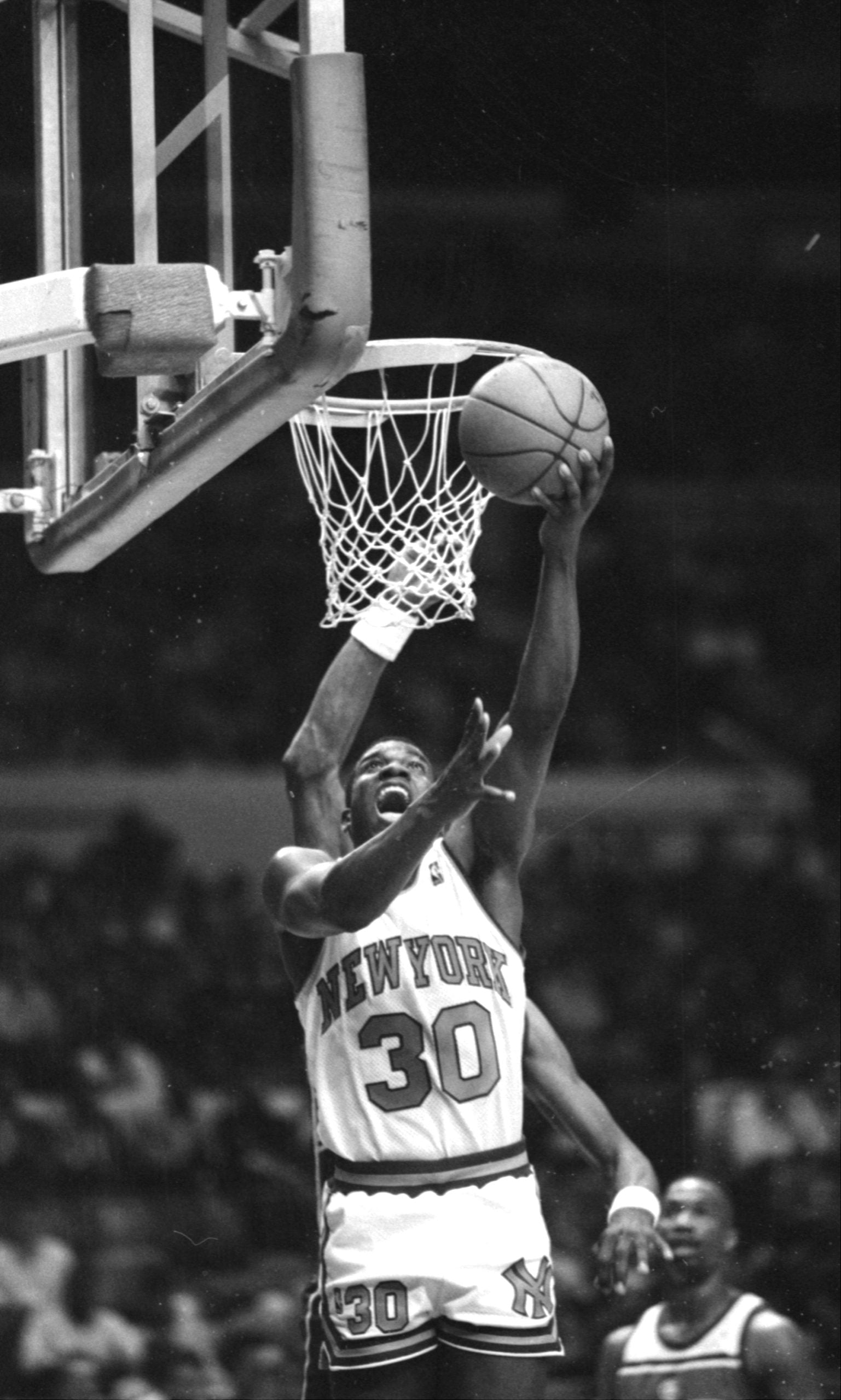
King was born in New York, but he began his NBA career in Jersey. The Nets drafted him seventh overall in 1977 after his glittering career at UT, where he averaged 25.8 ppg during his three seasons (freshmen were ineligible to play back then), was named SEC Player of the Year three times and was a consensus First-Team All-America his senior year. He and Ernie Grunfeld, another New Yorker, brought the “Bernie and Ernie Show” to Knoxville and made Tennesseans care about something other than football. King and Grunfeld helped the Vols to a pair of NCAA tournaments, the second and third appearances in program history.
King made an immediate impact with the Nets, who were still reeling from ownership’s need to move Julius Erving to the Sixers when the team joined the NBA before the ’76-77 season in order to finance the League’s fee for their “invasion” of the New York market. King averaged 24.2 ppg in his first season, finished third in the Rookie of the Year balloting and was on the All-Rookie First-Team. After King scored 21.6 ppg in his second season, he was traded to Utah with two other players for center Rich Kelley. A year later, King was off to Golden State, where he stayed for two years and made his first All-Star Game appearance.
But in October 1982, the Warriors traded King to New York for All-Star guard Michael Ray Richardson, who was unhappy with his contract. The move reunited him with Grunfeld, whom the Knicks had signed as a free agent six weeks earlier.
“Anytime you make a trade for a player like King, you must be willing to give up a player of quality,” Hubie Brown said.
The Knicks were certainly getting plenty of quality in return. And it didn’t take King much time to show it. He averaged 21.9 ppg in ’82-83 before exploding the next season. King was third in the 1984 MVP balloting and named First-Team All-NBA after putting up a career-high 26.3 ppg and shooting 57.2 percent from the field. He scored 50 points in back-to-back road games against the Spurs and Mavericks.
But King’s real performance came in the postseason’s first round, when he averaged a ridiculous 42.6 ppg in a five-game series win over Detroit. Those who saw it watched a player at the absolute peak of his powers. King was unstoppable and willed the Knicks to triumph over the Pistons, who were often powerless against his scoring prowess.
“Talk to any guy who’s a scorer, and he’ll tell you there are times when you go into a zone,” King said about his ability to score practically on demand. “When I was averaging 30 points a game, I didn’t have to think about anything. Everything is happening on a very instinctual level. On a particular night, no matter what you do, there’s a feeling it’s going to work. It’s an incredible feeling. There’s nothing like it.”
The next season, King was even better. He scored 60 against the Nets on Christmas Day. In February, he put up 55 against Jersey. He was leading the League with 32.9 ppg when he tore his ACL and his meniscus while also fracturing his femur. The meteor had crashed to earth. King missed all of the ’85-86 season and played just six games the following year. He became a free agent in 1987, and though he averaged a strong 22.0 ppg in four seasons with Washington and was an All-Star in 1990-91, when he scored 28.4 ppg, it wasn’t the same.
And it wasn’t New York. King’s comeback was an amazing story. He actually started the ’91 ASG. King called it “a special moment.” But we are all left wondering and wanting. What might he and the Knicks have accomplished if he hadn’t gotten hurt? Then again, not having King for the final part of the season allowed New York to collapse in the standings and eventually win the Lottery so they could draft Patrick Ewing.
But a full-strength King would have been quite a weapon for several more years in New York. During his time with the Knicks, King was great. He was unstoppable. He was a phenomenon. He was the Brooklyn kid who lit up his hometown.
And it’s a damn shame those lights went out too early.