The Sole of 2K, Where Sneakers Meet Simulation
Every cut, stitch and mold of a basketball shoe is designed to optimize jabs, pivots and plants. But how does real-world performance translate from the court to the virtual hardwood of the NBA 2K franchise?
For years, the development team at Visual Concepts has mastered the art of capturing the intricacies of NBA and WNBA athletes’ signature shoes, using advanced technology to deliver cultural artifacts and unparalleled authenticity in NBA 2K.
“You’re being entrusted with someone’s art,” says NBA 2K Senior Stage Technician Ryan Allbaugh. “Shoes are a part of basketball culture. Showcasing that and getting people excited about that aspect of the culture is something we have a big part in.”
In an era where digital expression is at an all-time high, the NBA 2K staging team has the utmost reverence for the shoe designers who sculpt these masterpieces, as well as the devoted fans who covet their work. Before players can begin growing their MyPLAYER’s digital shoe collection in NBA 2K or flaunt their footwear around NBA 2K26’s in-game metropolis The City, the shoes must go through a series of meticulous checkpoints for their in-engine recreations.
Everything starts with actually acquiring the real-world shoes, a covert operation which sometimes feels straight out of a spy thriller. On rare occasions, when only one model of a newly developed shoe exists, brands will send a representative on a top-secret mission to deliver confidential, unreleased materials in a locked briefcase to undergo the scanning process. Once the staging team receives the package, the fun begins.
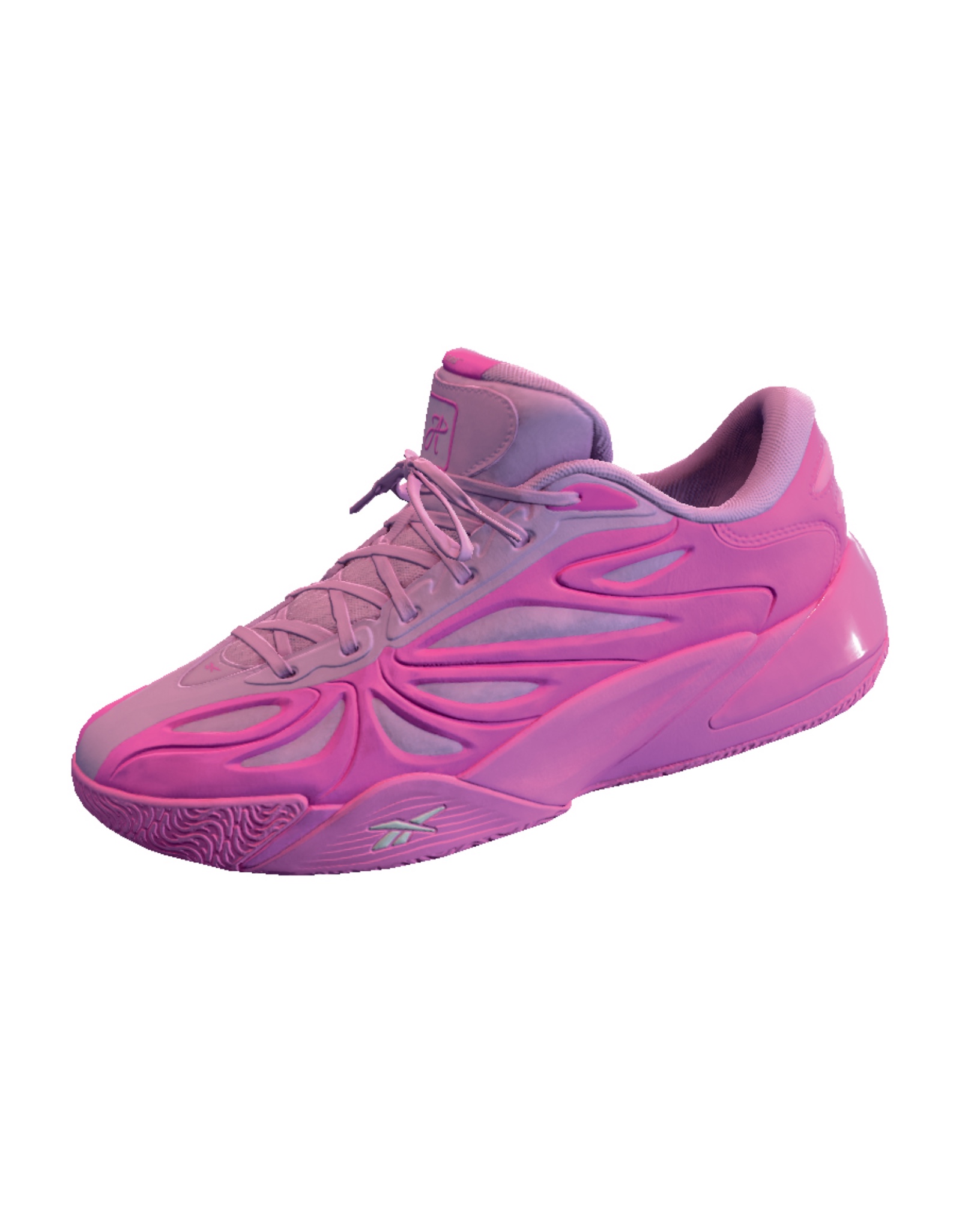
Under the bright lights of the commercial park studio, the team sets the stage for an up-close photo shoot. Current NBA MVP Shai Gilgeous-Alexander’s SHAI 001 and 2025 WNBA season rebounds leader Angel Reese’s Angel Reese 1 are just two of the new styles that had to be perfected for the newest game. With the shoes posed atop a pedestal with a rotating turntable for a handful of striking angles, Allbaugh and Senior Supervising Producer Bill Gale began putting their reel together.
“We take a series of reference photos, which we then send to [Visual Concepts],” Allbaugh explains. “We take approximately 30 to 40 reference photos of the right shoe, as well as photos of the left shoe and then a few extra photos to ensure that the logos are identical. Sometimes logos are flipped or mirrored, so we’re constantly on the lookout for any sort of differences between the two shoes.
“Then, we dress the shoes,” Allbaugh continues. “That’s stuffing it with paper and different kinds of materials to mimic what it would be like if an actual foot were in the shoe. Then we put it on the turntable for another series of color photos that we’ll use to create the texture of the shoe.”
When the runway shoot is complete, the light show can start. Here’s where NBA 2K shares common ground with oil rigs, military applications and old car parts: they all use the Creaform MetraSCAN 3D to take digital renderings at 1,800,000 measurements per second with 30 blue laser lines.
“[MetraSCAN 3D] is used a lot in industrial applications, when you need to scan really small, detailed parts for things like duplication,” Gale shares. “You can scan an entire room with this thing or a super tiny object, whatever you want—and the resulting 3D render is pretty much a one-to-one.”
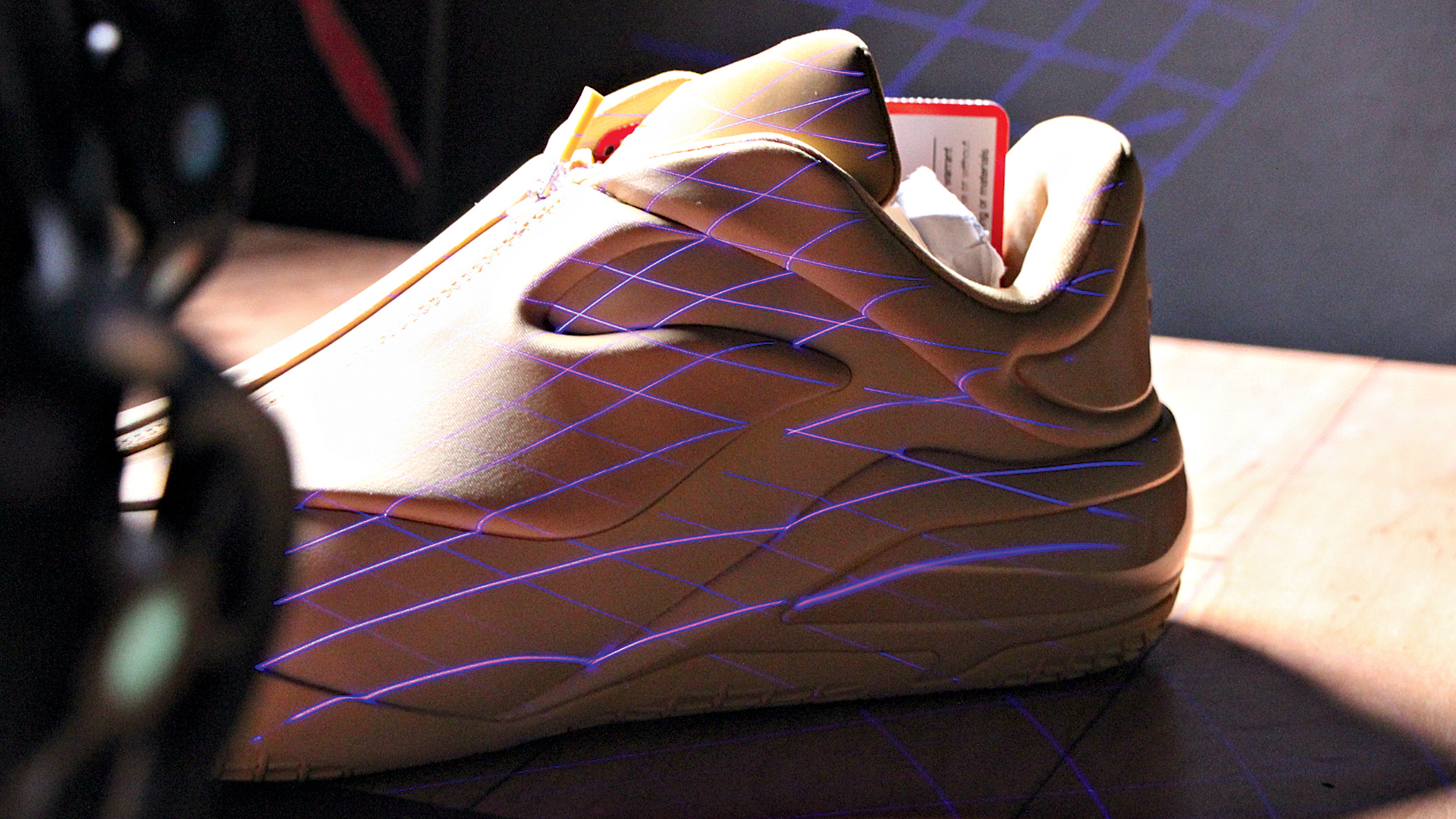
This geometric orb—which to the untrained eye looks like a toy that would get passed around in a grade school classroom—syncs with a nearby infrared camera tower to triangulate the shoes, pixelizes them and transfers them onto a computer.
Once the shoe is successfully scanned, the staging team cleans up any image defects and digital noise, then aligns the high-poly, high-detail Creaform scan, which is monochromatic, with a low-poly, low-detail textured (and full color) scan of the shoe. Granted, “low-poly” in this case is only by comparison. When the shoe appears on a player’s foot in-game, the resulting scan looks incredibly lifelike and true to the genuine article.
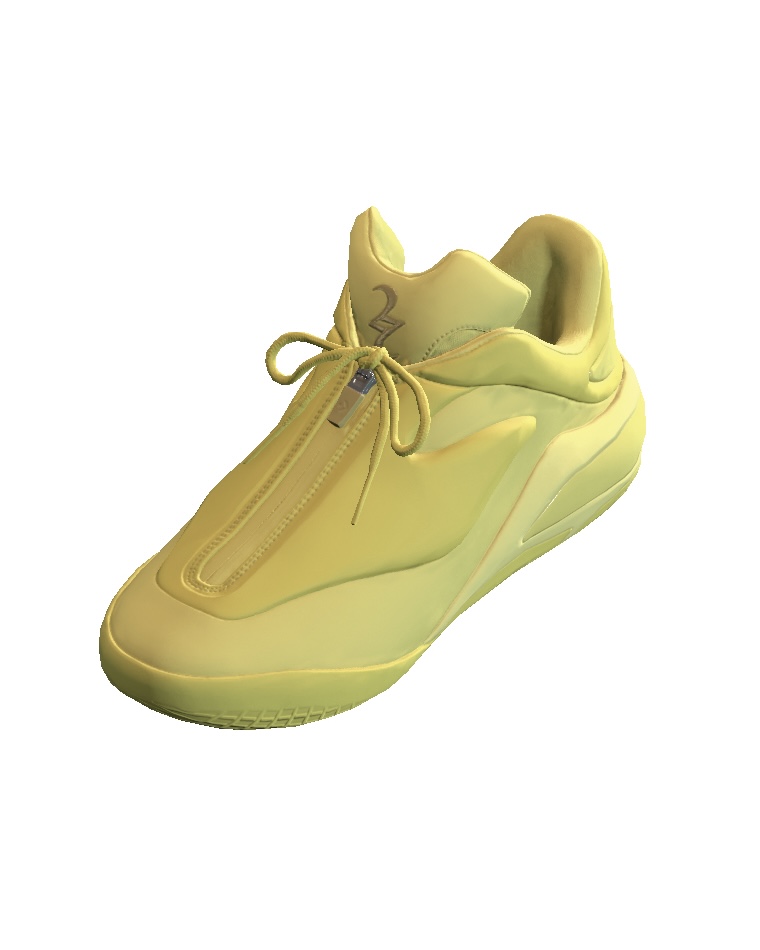
The team at Visual Concepts takes incoming shoe scans and gives them the finishing touches. Pixels are polished, threads are tightened, resulting in perfect NBA 2K replicas, like the SHAI 001 (top) and the Angel Reese 1 (bottom). Then the shoes are placed on digital shelves, ready to be worn and molded by the next MyPLAYER looking to leave their imprint in NBA 2K.
“We want to give people what they want,” says Allbaugh. “Shoes are a part of the game that appeal to a lot of people, and for us to be able to provide something they value feels good. I’m proud to be a part of something that brings happiness to people’s lives.”
Kyle Martin works in Global Brand Strategy at 2K.
Photos via NBA 2K.