Desmond Bane Has a New Home with the Orlando Magic
No one in the NBA is enjoying the summer sunshine more than the Orlando Magic.
Earlier this offseason, the team unveiled the sickest threads imaginable: a buttery trio of throwback-inspired joints that harken back to the team’s pinstripe days, when Penny Hardaway and Shaquille O’Neal terrorized the League as members of the iconic ’90s unit that, at its apex, sprinted to the NBA Finals. Today, a new-look Magic team hopes to recreate that success as it prepares to enter the 2025-26 season.
Despite numerous injuries last year to Paolo Banchero, Franz Wagner and Jalen Suggs, the young, rising squad still managed to bag the Southeast Division, falling to the Boston Celtics (pre-Jayson Tatum’s injury) in the first round, but flashing glimpses of a dominant core unit for years to follow.
Yet, for a team that hasn’t won a playoff series since 2010, they’re feeling, and looking, especially cheery. There’s a reason for that. Their Disney-adjacent optimism has been nothing short of luminous after acquiring one of the League’s best three-point magicians and floor-spacing gurus to kick off the solstice: Desmond Bane.
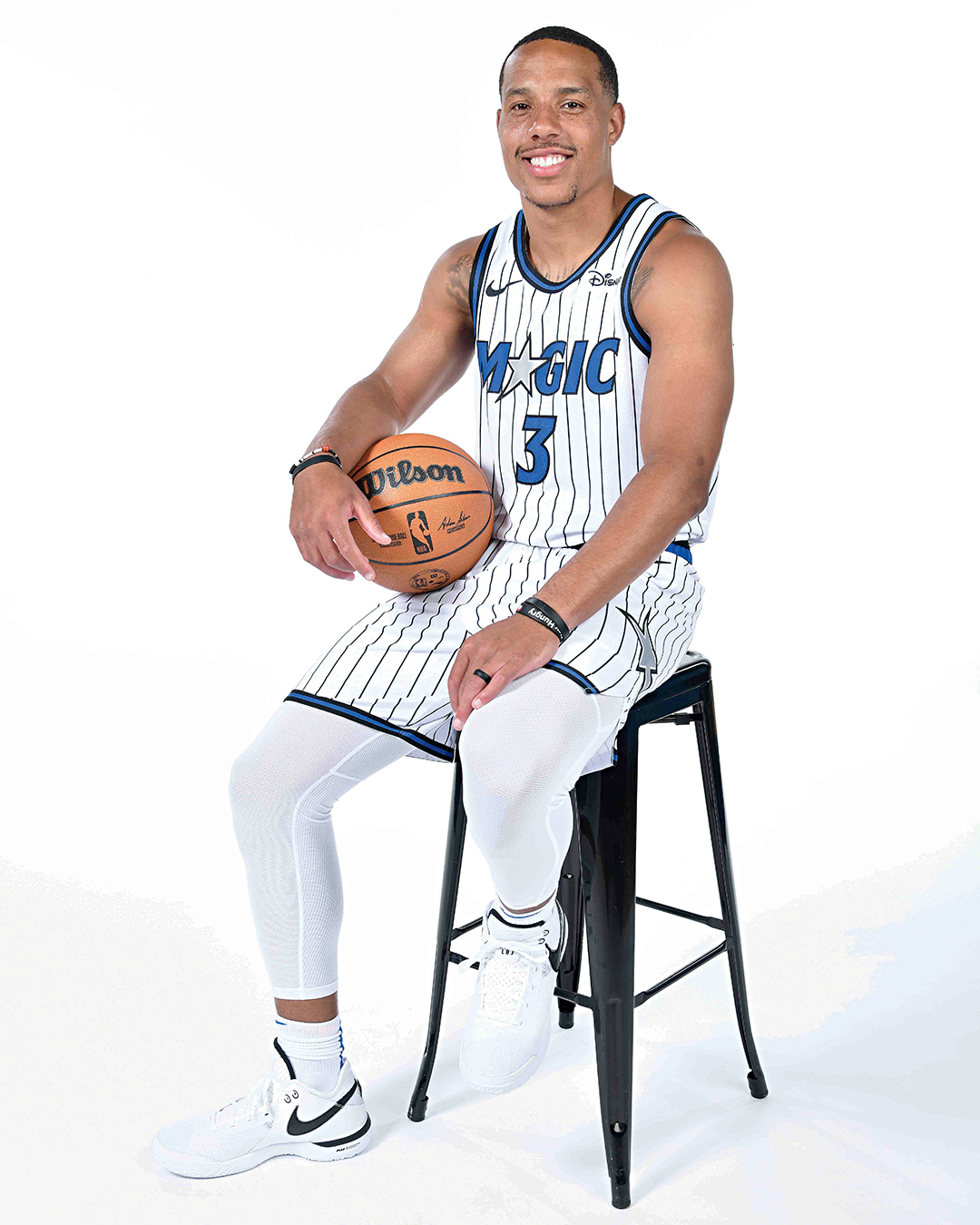
On June 15, during the NBA Finals, the Magic pulled the trigger on their biggest blockbuster trade of the decade by sending Kentavious Caldwell-Pope, Cole Anthony, four unprotected first-round picks and a first-round pick swap to the Memphis Grizzlies for Bane. A borderline All-Star who averaged 19.2 points, 6.1 boards, 5.3 dimes and 1.2 steals per game in his most recent season, Bane has consistently shown up as a five-year veteran with an abundance of postseason experience and leadership ability.
Bane was with his wife and two sons (a 3-year-old and an infant born this year) enjoying a Father’s Day meal when he got the call from the Grizzlies about being moved. And though he truly enjoyed his time in Memphis—the only place he and his family have called home in his professional life—he grasps the appeal of Orlando, too.
“It’s a fantastic opportunity, and it’s nice to be able to go into a situation where you have a real chance to win,” Bane says. “That’s all you can ask for, to compete and win at the highest level. Down in Orlando, we have the players, the staff, an organization that is built and ready to do it. That’s very exciting to be a part of. With health, they would’ve been even better last year, offensively and record-wise. If we can get a chance to gel with our new pieces and with our young guys coming in, it’ll take off.”
Importantly, he’s bringing a deep-range arsenal to Orlando’s Kia Center, precisely what the Magic, who, for the past two years, have ranked near the bottom of the League’s offensive efficiency, have lacked. A defensive-minded squad, the franchise has built its identity around stout ball stoppers and lengthy rim protectors, but haven’t finished higher than 18th in points per game since 2010-11. For context, that Magic team featured Dwight Howard alongside JJ Redick and Jason Richardson (whose son Jase will now run alongside Bane as a rookie). So yeah, it’s been an entire generational minute since the Magic could get buckets like that.
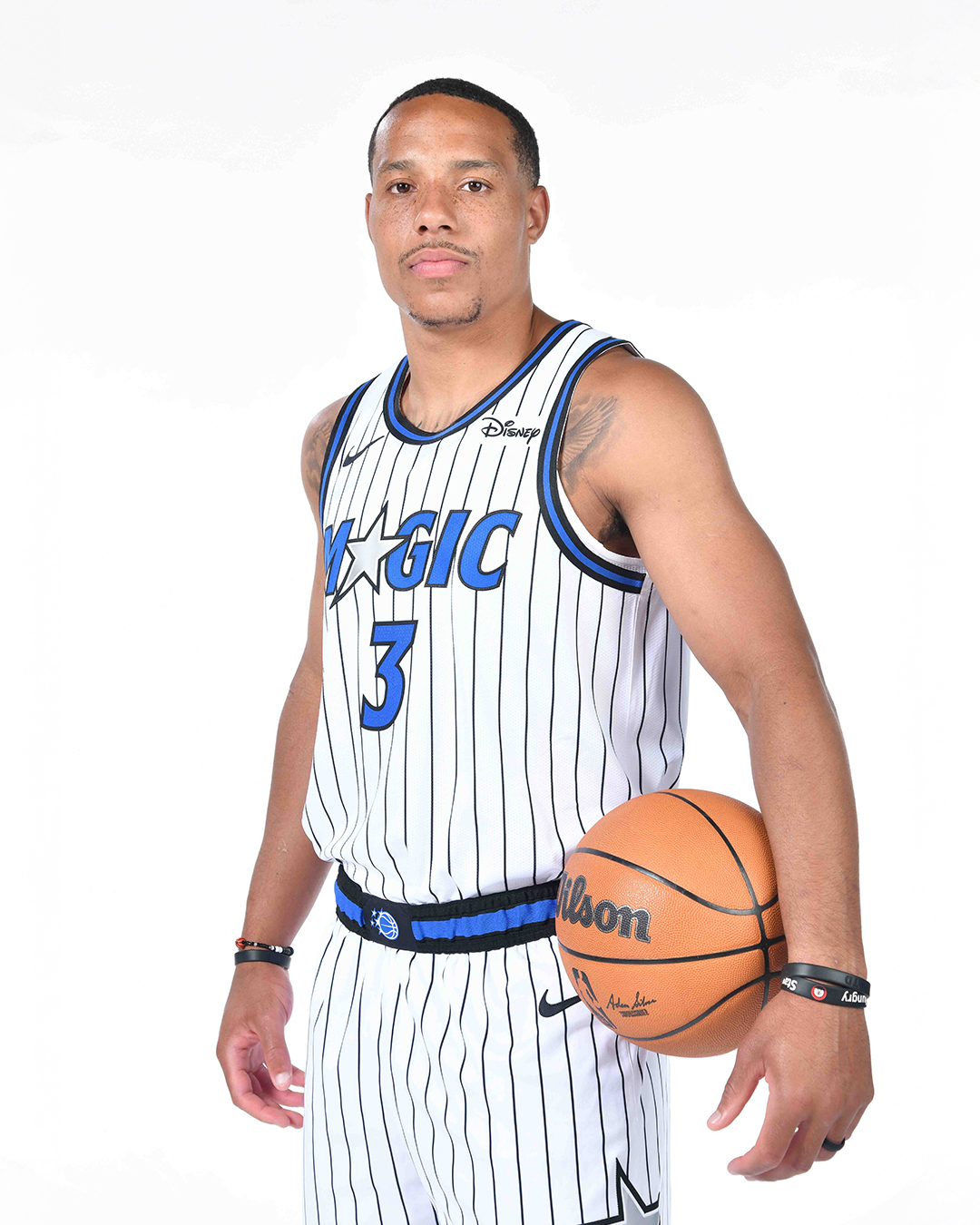
In 2024-25, the Magic ranked last in the League in three-point percentage. It makes Bane’s 39.2 percent from long distance last season (and 48.4 percent overall from the floor) look all the more enchanting. Whichever way you slice the numbers, he’s among the Association’s most coveted gunners with 47/41/88 career shooting splits on high volume. Straight up, Orlando is getting a veritable assassin. He’s a vet who seems more eager, aware and capable than ever to win as he enters his prime. And, perhaps most essentially, he’s ready to do whatever is needed to help Orlando reach the promised land.
“The great teams that go deep into the playoffs that I’ve been a part of and have been good, have always been together, unselfish, mature,” Bane reflects. “We have all the talent [in Orlando]. All-NBA, All-NBA Defense, All-Star level guys. We check those boxes. It’s about sacrificing ourselves to the team. Being the hardest playing guys that you can be. Playing together.”
He recalls a tough 2022 playoff series against Anthony Edwards and the Minnesota Timberwolves, in which Bane went off in Game 3 for a team-high 26 points, highlighted by seven threes drained at a 46.7 percent clip. For Bane, that solidified the intensity, and euphoria, of winning in the playoffs. Memphis would take the series in six games, in what Bane describes as “an emotional series, ups and downs, all over the place.” Winning in the postseason is the kind of thing that isn’t exactly guaranteed in a League as fickle as the NBA is, in which the tides can quickly shift, and every roster is one unlucky bounce away from seeing it all squandered away.
“To come out on top, I was on top of the world. But I was kind of naive not really understanding the moment,” he admits.
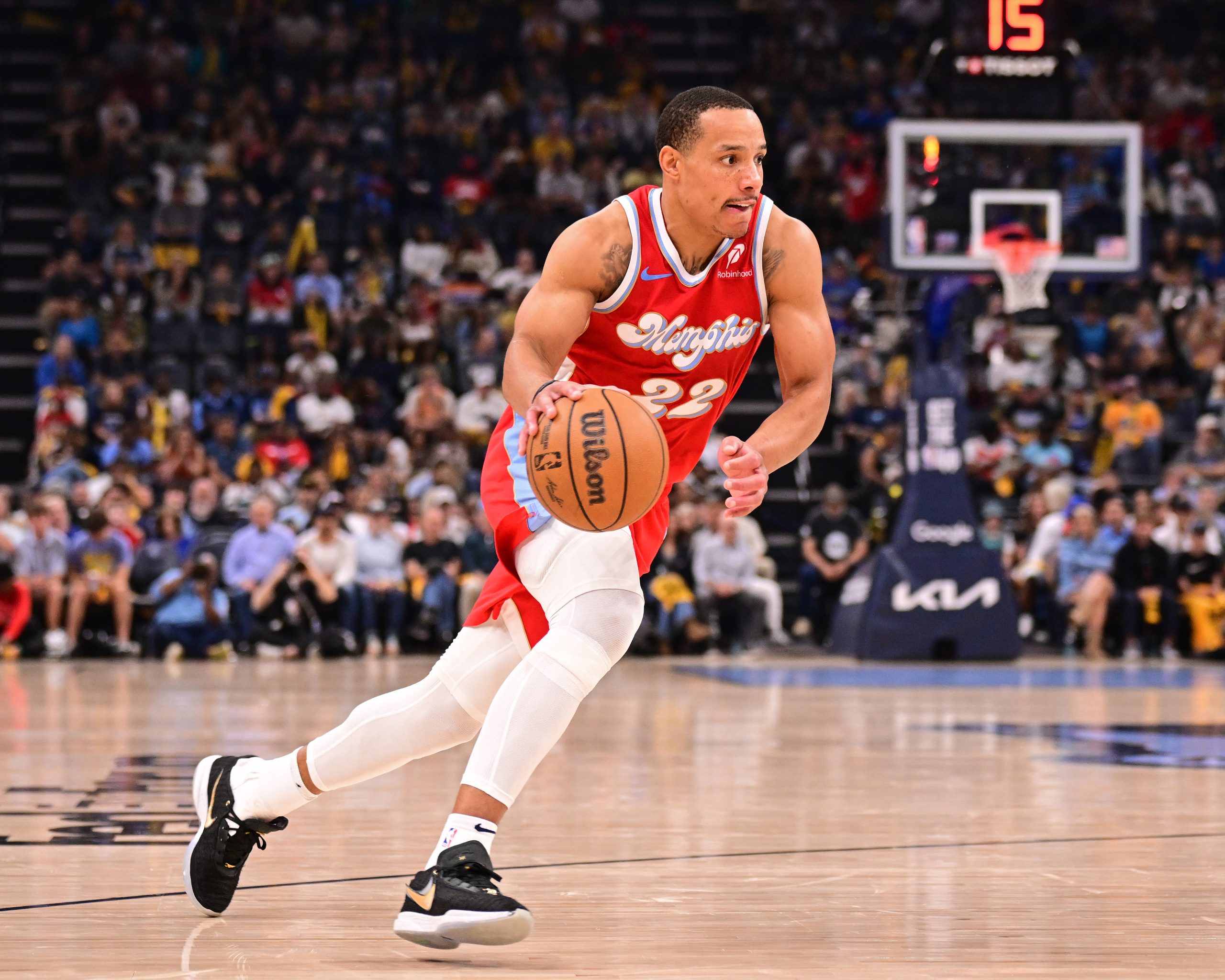
To achieve that again, and so much more, will require every ounce of effort and focus. Luckily for the citizens of Orlando, that’s another one of Bane’s sterling qualities.
“We’re getting it in right now, consistently,” he says from his offseason pad in Texas, where he played college ball and where his wife is from. “I’m trying to come into camp in the best shape possible, doing lots of cardio. I don’t want to play catch-up in a new situation. I’ll be handling some on-ball load, scoring off the screen, working out of pick and rolls, getting different actions. It’s a multi-faceted approach.”
Clearly, Bane isn’t an overnight success. The 27-year-old former 30th overall pick out of Texas Christian University, who grew up in a small Midwestern town with only 20 classmates in his graduating class, got it out of the proverbial mud. At the time, Bane was barely on anyone’s radar. Coming out of Seton Catholic High School, a tiny rural community in Richmond, IN, Bane was a zero-star, unranked recruit. He had no DI offers until his senior year. Then, as a freshman in college, he attended his first USA U19 camp, his first sniff of competing against upper-echelon talent. Going up against future lottery picks and first-rounders, Bane realized something about himself: he could fling the rock better than most.
“In high school I was just tall, getting to the rim, taller than everyone, dominating in the paint. I didn’t have to shoot jump shots much,” he says. “But [in college], everyone was bigger, faster, more athletic, so I had to find other ways to score and started shooting the ball. It started going in, you know?”
His coach told him to train like a pro, think like a pro, move like a pro. “So I began to do that,” he says. From that point on, Bane went into “grind mode” and began to approach the game differently, tactically. Philosophically, he began to model his game after a high-level Danny Green, a former second-round role player who helped deliver NCAA and NBA championships in North Carolina, San Antonio, Toronto and L.A. A 3-and-D type who could put it on the floor when needed. Bane studied others, too: Joe Harris, a Brooklyn Nets favorite at the time known for his long-range consistency with a Three-Point Contest trophy to his name. Later on, his coaches encouraged him to expand beyond a shooter’s mentality. So he watched Donovan Mitchell in transition. CJ McCollum in pick-and-rolls. Damian Lillard’s footwork (and snuck in some footage of Dame’s off-the-dribble threes). Bane especially enjoyed watching Klay Thompson, a quietly competitive killer who launched himself to the top of the League with his Splash Brother, Stephen Curry.
It’s safe to say Bane’s preparation has paid off.
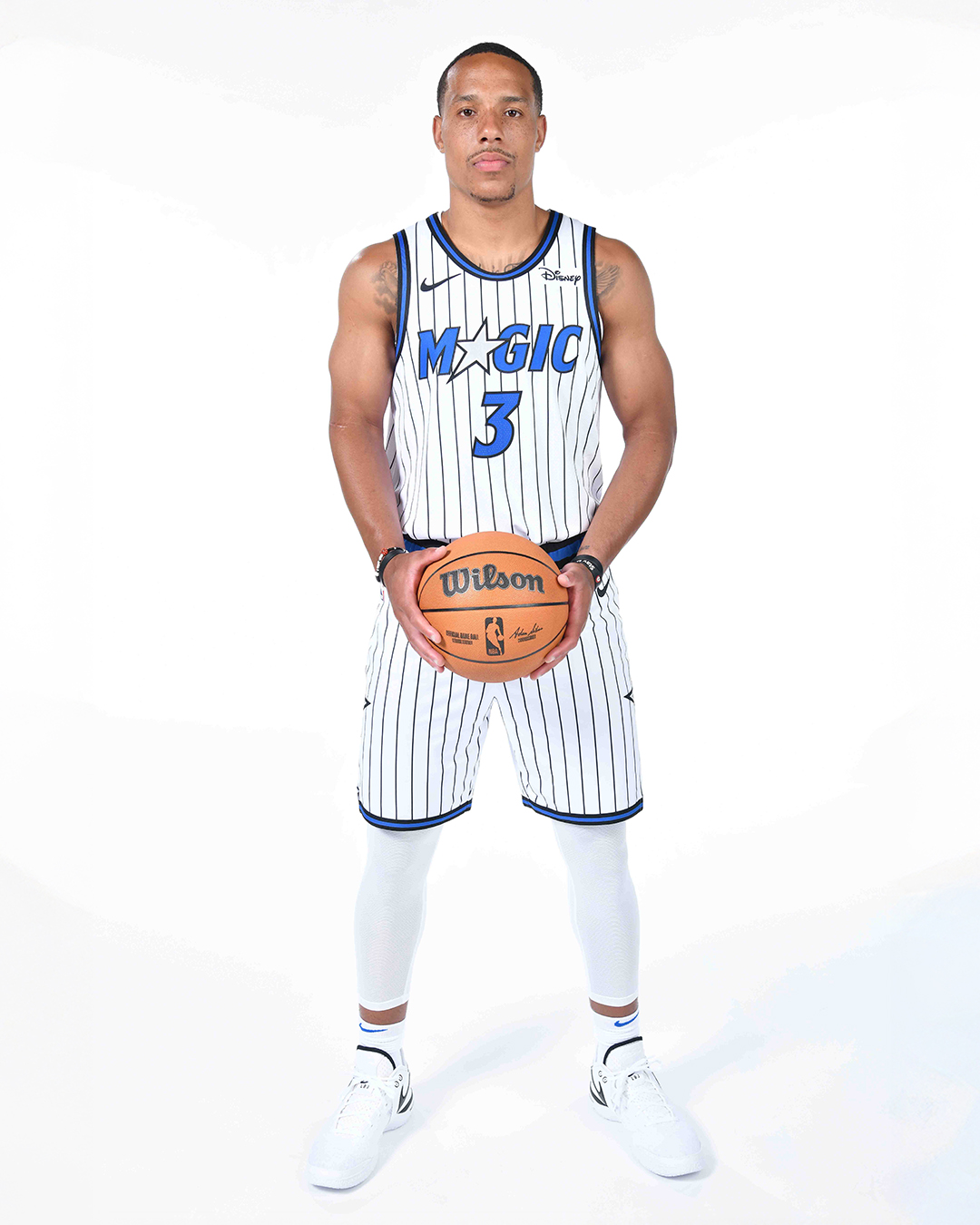
Earlier in his career, Bane became the third qualified player in hoops history to shoot a minimum of 43 percent from three-point land in his first two NBA campaigns (behind only Curry and Anthony Morrow). He also boasts the third best three-point accuracy on the road in a single season in NBA history (47.6 percent) and has led Memphis in three-pointers made, attempted and overall percentage. Since entering the NBA in 2020, Bane has shot 43.2 percent on catch-and-shoot threes.
Look, I’m not much of a numbers guy, but I’m also no dummy: shooting 41 percent from three with over six attempts per game is absolutely odee for a career stat. For historical context, Larry Bird finished at 37.6 percent, Reggie Miller at 39.5 percent and Ray Allen at 40 percent. The aforementioned Curry is one of the few legends rocking a statline harder than Bane, with an unreal 42.3 percent. Thompson, meanwhile, beats out Bane by only 0.1 percent.
Here’s the truth and the answer: In a shooter’s league, Bane is outshooting the best of them. But his bag is so much deeper than that, too. And his skills go eons beyond the lifelessness of numbers and stat sheets. It’s instinctual. It’s grit. It’s desire.
Against the soon-to-be NBA champion Oklahoma City Thunder in the first round of the 2025 playoffs, Bane gets an inbound from Zach Edey after a Thunder score. Bane is immediately met by a feisty, headbanded Alex Caruso deep in his own backcourt. Bane hits him with a nifty between-the-legs-into-a-spin-move combo. Caruso—a particularly stalwart defensive specialist—is left grasping at air near half-court. As the Memphis crowd audibly gasps, Bane pushes it further, determined, singular, alone against multiple defenders in position. One dribble. Two dribbles. He is approached by Cason Wallace from behind on his right side. Bane instinctively switches his handle to his left while still going forward, only to be confronted next by Isaiah Joe near the top of the key. Bane lifts the ball with both hands above and around Joe’s swiveling dome, Euro steps his way past him, switches the ball back to his right and banks in a deuce while Chet Holmgren and Jalen Williams look on. The entire sequence occurs in under 7 seconds from baseline to baseline, with no other Grizzlies player actively involved in the play. It’s just Bane going full-on Gotham mode and ravaging anything in his path in a must-win game.
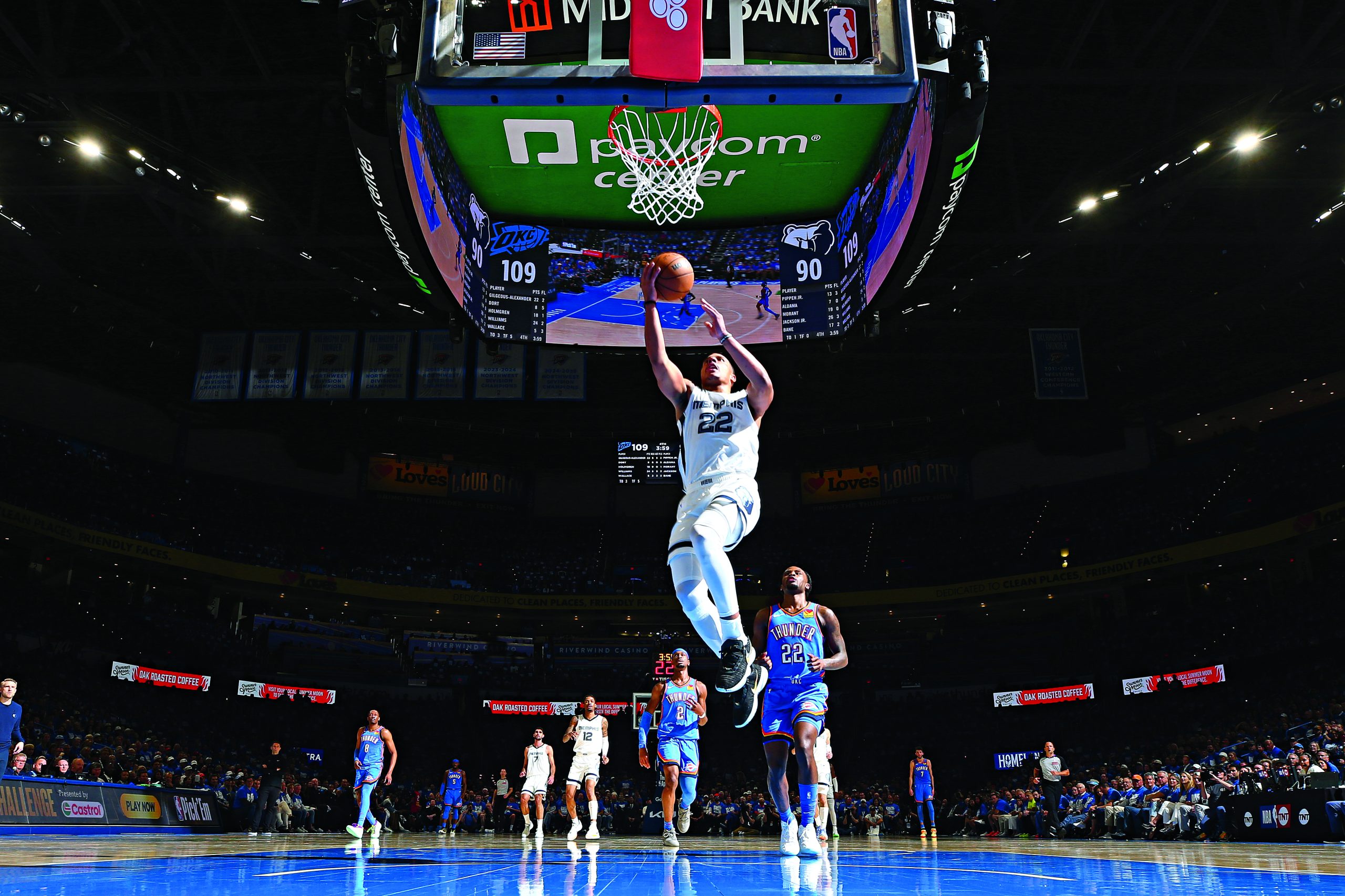
Another instance: this time against the Bulls in Chicago. Bane catches an elbow pass in his sweet spot, just above the three-point marker. His defender, Zach LaVine, immediately closes out because it’s Desmond Bane. Bane pump fakes. LaVine bites. (How couldn’t he? Bane had a decent look, after all). The Grizzlies’ only weapon on the court at that moment, Bane swerves around an immobile LaVine and takes two dribbles into the busy lane, where a younger, springier Matas Buzelis awaits. As Bane lifts off the ground, Buzelis goes up with his noticeably advantageous wingspan, signaling a no-fly zone. What happens next isn’t what most people think of when they think of Bane’s potency. With a Ja Morant-esque hangtime, he glides beneath the rim and smoothly windmills the ball across his entire body to the opposite side, where Buzelis is completely exposed. Bane English-spins that Spalding orb high off the glass for a not-so-easy 2.
Yup. Go watch the tape. Bane is so much more than just a one-dimensional shooter. He’s a well-rounded hooper, who will suddenly be flanked by the likes of Banchero and Wagner on the wings. It’s almost too tantalizing to be true when you look at it all on paper.
Later in the afternoon, as Bane finished with his workout and was gearing up to enjoy family time in the Texas sun, the latest NBA 2K ratings came out. Only two players (Curry and Kevin Durant) were rated above 90 as three-point shooters. It begged the question: Is Bane—after all those stellar years in Memphis, when he, at times, became the sole offensive focal point while Ja was out and, against all odds, set three-point records ablaze—still being slept-on?
Ever the level-headed archer, Bane responds with a deep tone of self-assurance: “Time will tell.”
Photos via Fernando Medina and Getty Images.