Sue Bird is the Storm: A Q+A with the Seattle Icon
One city: Seattle.
One team: the Storm.
One player: Sue Bird.
Two decades, but truly, forever.
Bird is the Storm.
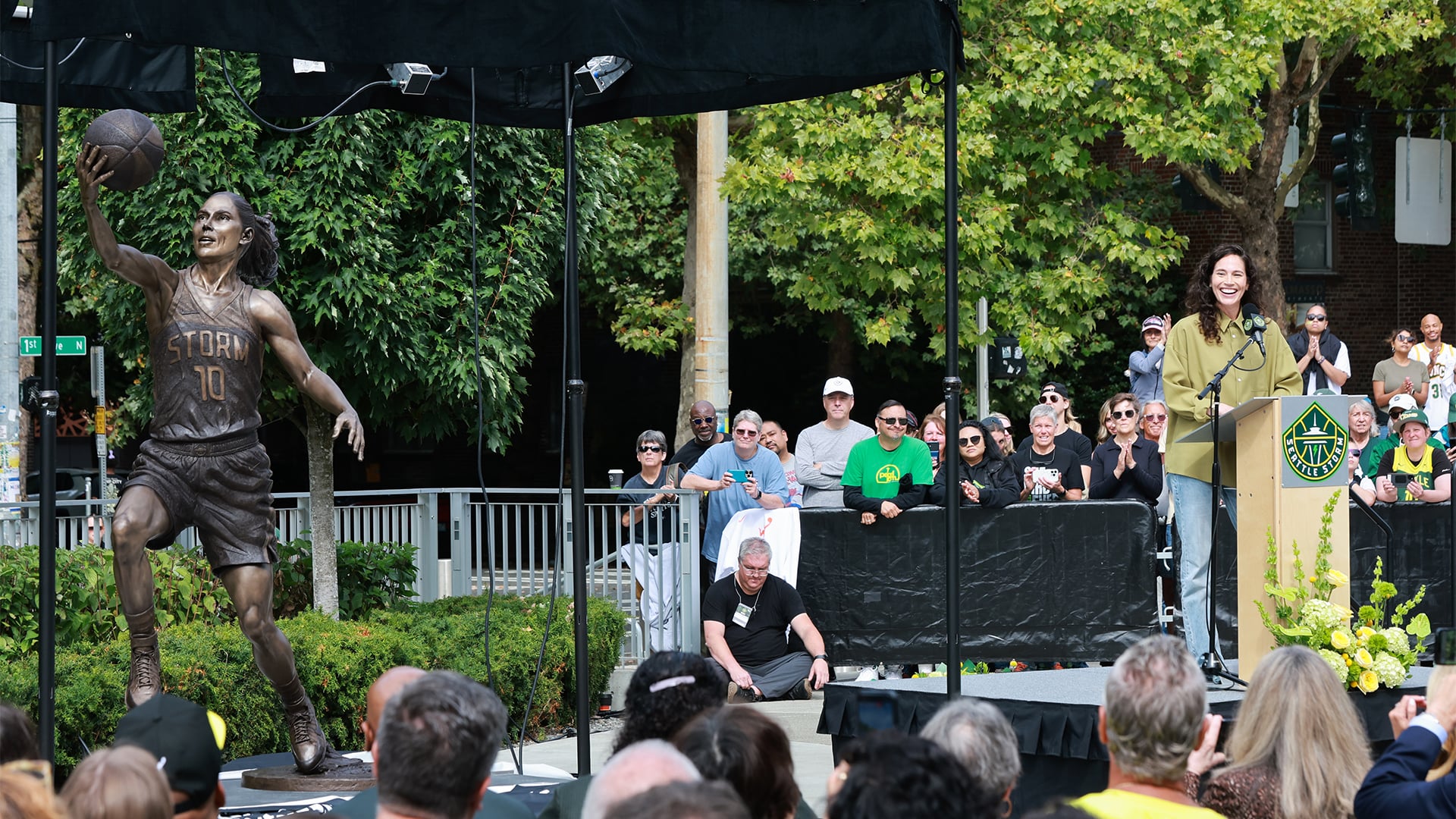
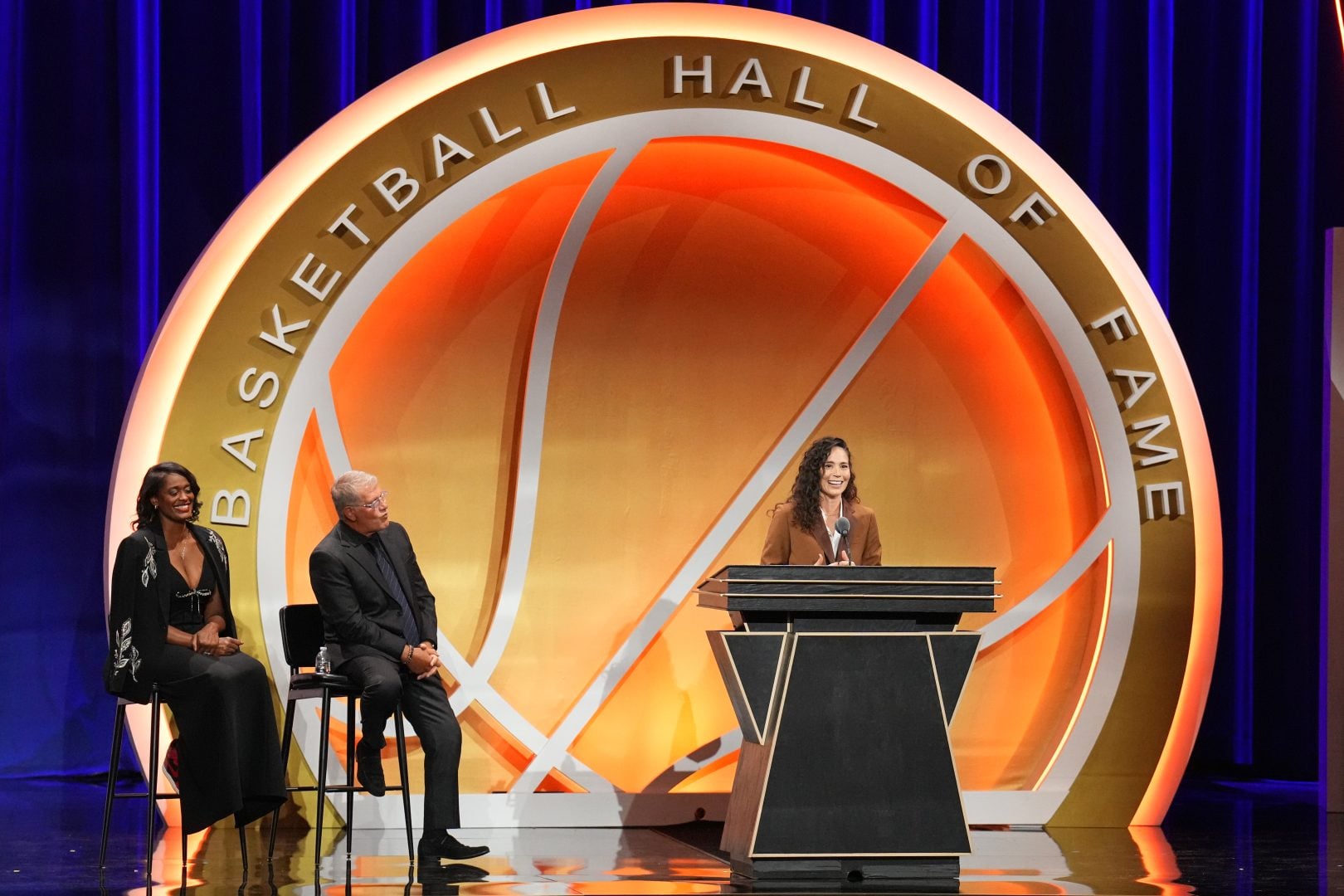
She played in the Emerald City for all 580 games of her Hall of Fame career, in the process, setting the record for the most appearances in WNBA history.
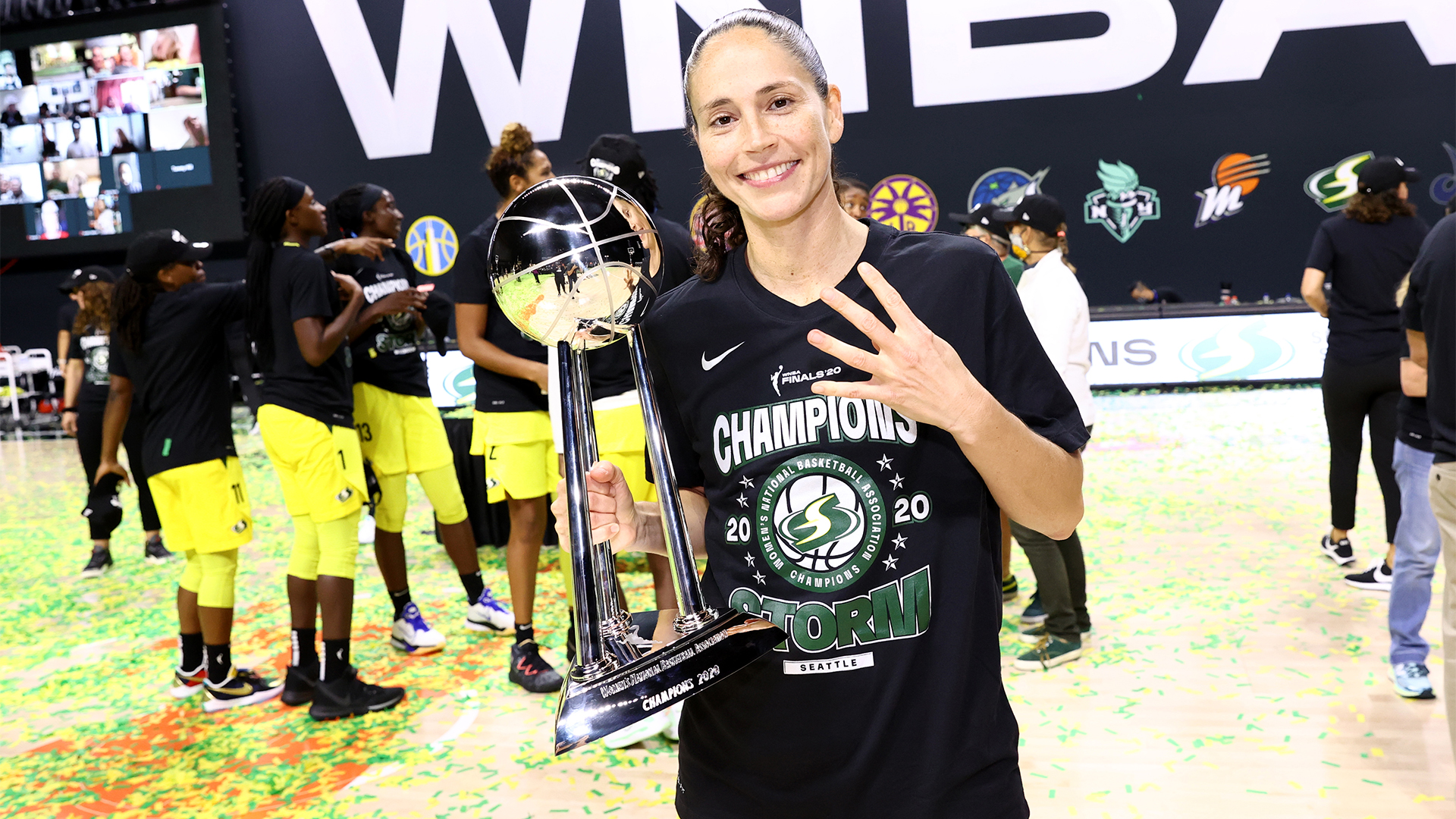
She led the team to four championships.
She, in addition to becoming the all-time leader in games played, also became the all-time leader in minutes played and assists.
She became a top ten leader in points scored, steals, field goals and three-pointers and she appeared in the most All-Star Games.
She ingrained herself within the community and became a Seattleite, entering into an enduring bond with the city and its residents.
She is just as loved in the city as she was while Key Arena (now Climate Pledge Arena) chanted her name.
She is also the newest WSLAM ICON, the latest honor in a list of impossibly long achievements. We caught up with the Hall of Famer to talk about Seattle through her eyes and the restaurants, music and moments she most associates with the 206.

SLAM: There’s a famous Australian pub in Seattle where you, Lauren Jackson and your other Storm teammates used to hang out. What was the first Australian dish you had at Kangaroo & Kiwi?
Sue Bird: Probably a meat pie.
SLAM: Did you go join LJ at summer concerts at the pier after Kangaroo & Kiwi? I luckily just talked to her about a week and a half ago and she had mentioned going to the pier to see acts like Melissa Etheridge and Macy Gray perform.
SB: Oh, I actually do remember Macy Gray. I don’t remember Melissa Etheridge. So yeah, I must have been there.
SLAM: You’ve made it very well known how important music is to you. Can you tell me what music reminds you of those days? Let’s say the first title run in ‘04. What kind of stuff were you listening to back then?
SB: Well, I’m from New York, and I was usually on the aux, although I don’t think it was an aux back then. But generally, I’m definitely more in the hip-hop category. Back then, I feel like Juvenile, like, “Slow Motion” had just come out in 2004. I just remember us dancing to that a lot. And then Ciara, “My Goodies” is a song that I feel like was that team’s song. Honestly, whatever was happening in ‘04 that was popular, we were definitely listening to it in the locker room.
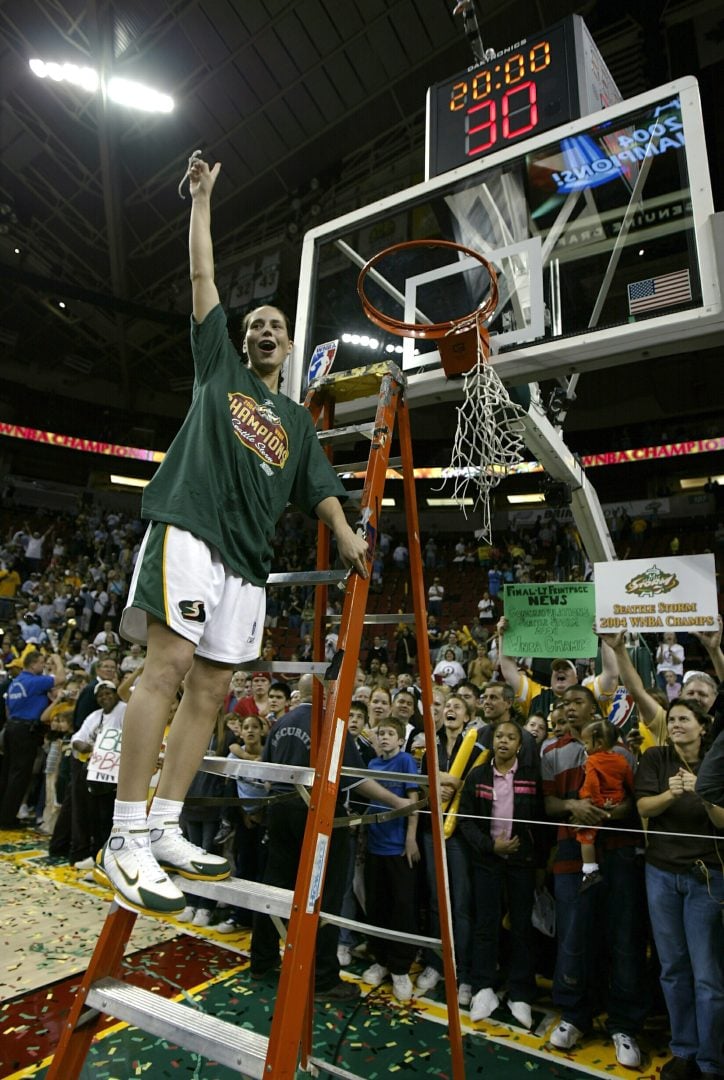
SLAM: And speaking of that title, do you remember anything from October 15, 2004, which is the day that you guys celebrated the championship with the city?
SB: Yeah, it was pretty special because at that point, the city of Seattle hadn’t had a championship for a really long time, so we were kind of one of the first teams to bring a trophy back. I don’t remember what kind of car it was, but I remember a certain brand of car–you can probably look it up–gave us all convertibles. So we’re all just sitting in the back of a bunch of convertibles. [editor’s note: the convertibles were Saab 9-3s]
We started–God, where did we start? I feel like we actually started at our practice facility. We went down 5th, and then ended up in West Lake, and we kind of felt like the Pope up there. We were up on this, like, coming out of this building, but we’re up high, and then thousands of people were down below us. But even along 5th, it was super exciting because everybody was coming out of the buildings, everybody was on the street. It was definitely an exciting day. I feel like the weather was shitty, but other than that, it was a great day.
SLAM: What happened to those convertibles? Did they take those back?
SB: Yeah, they took them back. It was a one-time only thing.
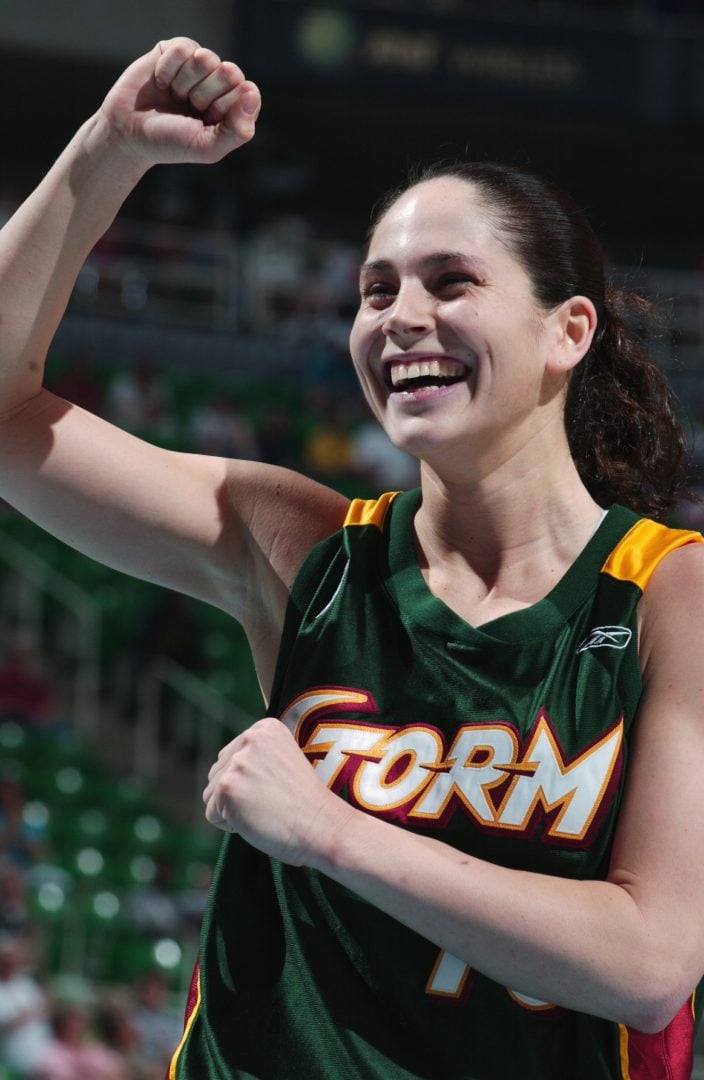
SLAM: You spent two decades in the Emerald City and Storm fans claim you as a Seattleite. Your roots in the city run deep. We read that you enjoyed going to How to Cook a Wolf on Queen Anne Avenue, Stateside on Pike Street and Homegrown on Marion Street.
SB: The best part about playing in the same city for my entire career is throughout each decade there were different spots. Some were new that would pop up, like How to Cook a Wolf. I feel like I started going there almost, like, day one. First of all it was really close to my house, but I remember when it first opened there was no signage. They didn’t take reservations. It’s super small if you’ve ever been. It’s really small but, like, quaint. It has a really nice vibe in there. It’s kind of a secret. Somebody put me onto it. I don’t remember who. And then slowly, that restaurant blew up, Ethan [Stowell] blew up. He obviously opened up a ton of restaurants throughout the city that I also enjoy. That’s kind of how that started, but I probably have a story not exactly the same as that one with How to Cook a Wolf, but there’s tons of restaurants, tons of coffee shops, you know? Homegrown is a local sandwich shop. Tons of those just throughout my time there I got to experience as the city grew.
SLAM: What was the spot later on, let’s say with that 2018 core of Crystal Langhorne and Noelle Quinn and Alysha Clark and the young pups, Jewell Loyd and Breanna Stewart?
SB: Probably starting, like, 2015, 2016, our team started going through a rebuild. So come 2018, I was by far the oldest on the team. These are the Breanna Stewart, Jewell Lloyd years, but even then, they’re, like, 23, 24, so even they’re young. So, I feel like in order to go out with my team, I was doing what they wanted to do, which was real heavy on Joey’s. They loved Joey’s. Joey’s used to be on South Lake Union, and it was a very popular spot, but it was also right on the water. I remember going there a lot.
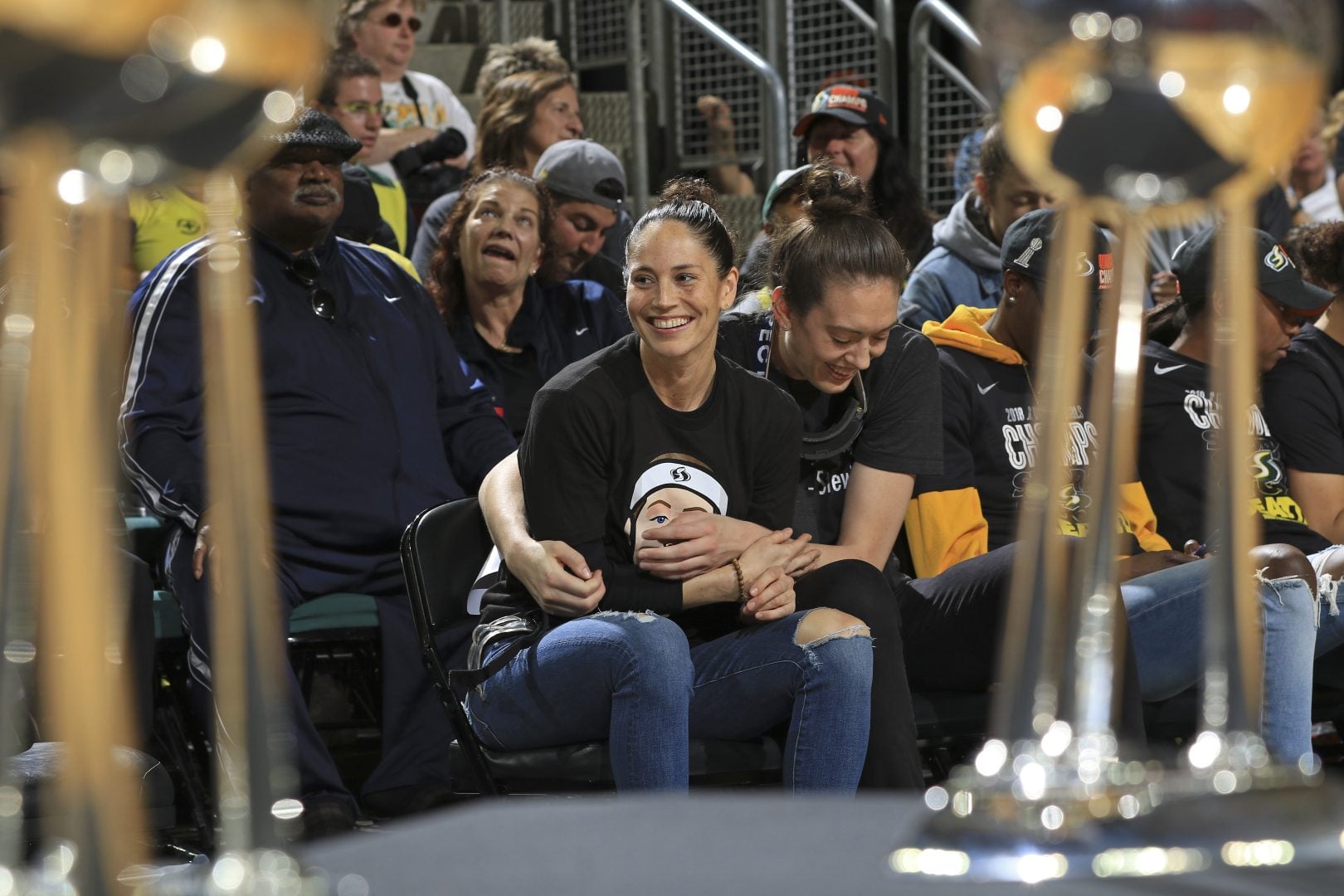
SLAM: And that was with Lang and Noelle and AC?
SB: Oh yeah, for sure. Yeah, that team, 2018, was a really close group. We did a lot together. We hung out a lot. They were kind of going to the more trendy spots. I was trying to find the new restaurants, check things out a little more adult, if you will. But like I said, to hang out with them, I had to–although they did love Havana. R.I.P. I don’t know how familiar you are with Seattle, but Havana is like… How do I describe Havana? It’s, like, a bar, but it’s also got, like, a lounge club vibe to it. Not crazy club vibe, not super dark and, you know, underground type of thing. But on Tuesdays, they would do a 90s hip-hop night and my teammates, which was great for me. None of them were alive when all this music was coming out, but they loved it. So whenever we could on Tuesdays, we would go to Havana. And I say R.I.P. because it just closed its doors, which is, for anyone who was in Seattle during that time, it was a sad day to hear that.
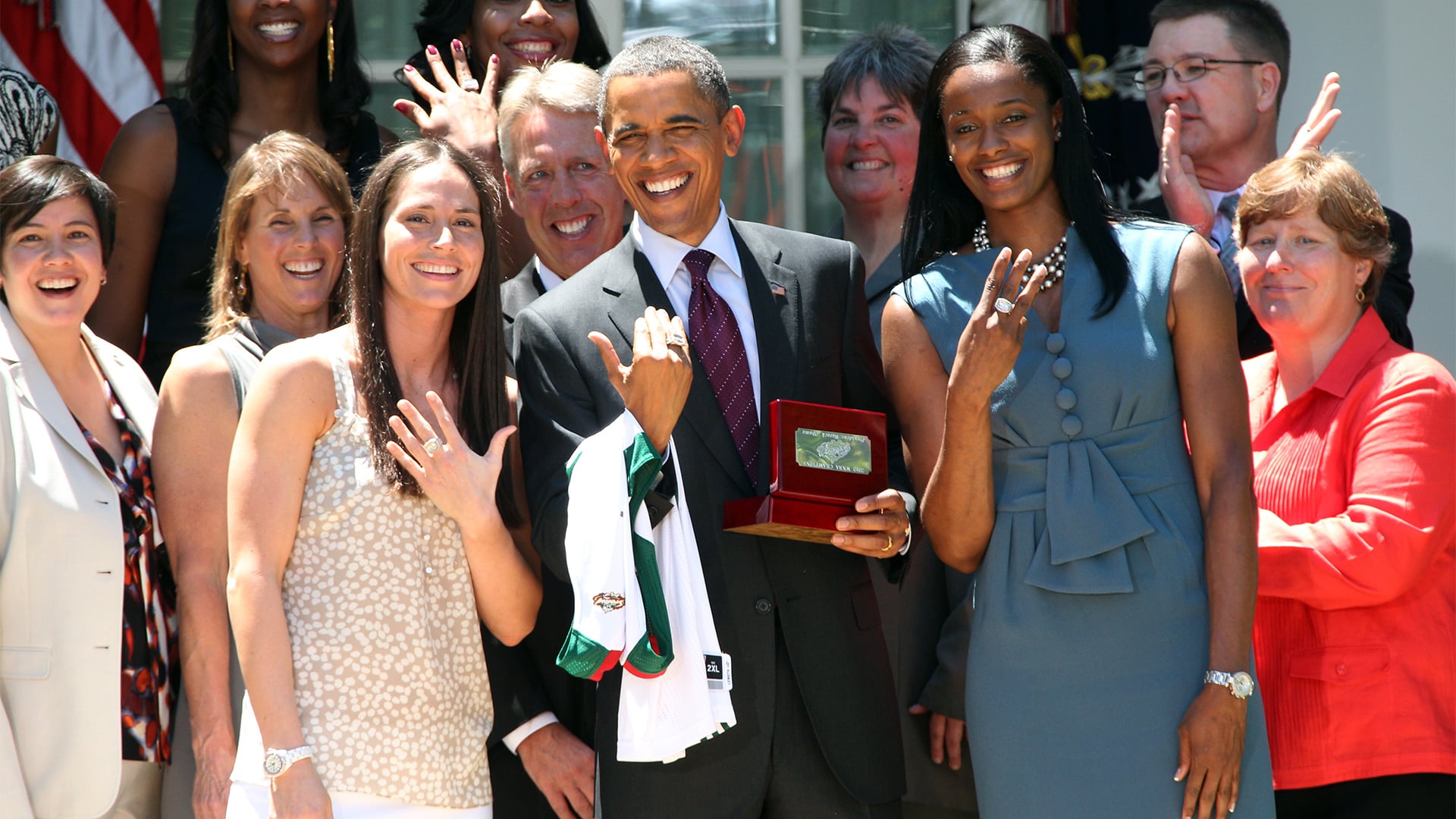
And actually, to tie it back in [2010], we won the championship on the road. When we came back the next day, and it might have been the day of the parade, we all went to Havana after. So Havana really was a staple. That’s why it’s sad that it’s closed.
SLAM: The owner is gonna love to read these words about its impact on the Storm’s glory days.
SB: Oh yeah, I’ve been seeing online a lot of people have been paying tribute. I think they had their final day. Either had it or it’s coming. A friend of mine invited me, but I wasn’t in town.
SLAM: Were there any other important Seattle landmarks for you? Did you ever go to the Space Needle?
SB: No, never, only when I absolutely had to. [laughs] Not that there’s anything wrong with the Space Needle. I think it’s one of those things. The true sign of someone who lives in a city really is they don’t do any of that stuff. For me, I mean, humble brag, the times where I went up the Space Needle was to raise the flag. So I got to do that a couple of times.
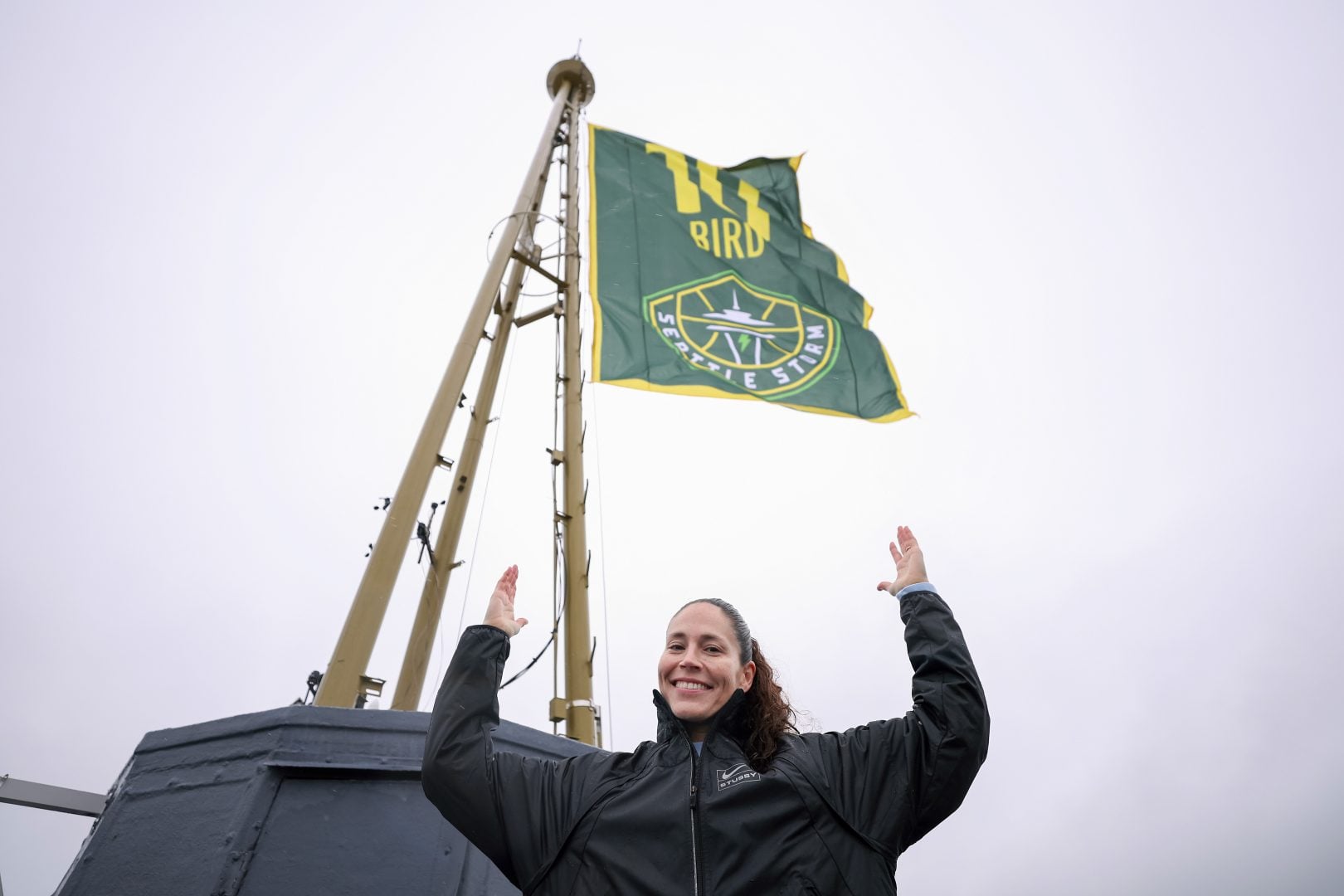
SLAM: And one of those celebrations was in 2010, right?
SB: I think all of them. Maybe not ’04. I can’t remember. But yeah, the Needle is obviously iconic and special to Seattle. Everybody knows Seattle because of the Needle, so the Needle does–I’m talking about it like it’s a person–but the Needle does a great job of honoring big moments. Whether it was our championship seasons, I think we raised a flag one year just because we changed our colors and our logo, when my jersey got retired, they hung up my number up there. They always do right by big moments in Seattle and it’s an honor to be able to go up there.
SLAM: Hold on to that thought of talking to Seattle like it’s a person because I do want to come back to that, but before we do, I just want to see if you can give me three words to describe all four of your championship seasons.
SB: Hmmm… I think ‘04… well, it was the first. It was first. Dare I say special. It was the first, it was special. This is true for all the championships, but this was a really close-knit group. I know you asked for just three words, but what was different about ‘04 in comparison, well, really ‘04 and 2010 for me personally was–actually, the word I would use is build or foundation. This is the start.
And what I was gonna say about ‘04 and ‘10, is I was of the same age of my teammates, so we were kind of experiencing this together. I think 2010, the word I would use is establish, because we built it in ’04, but now we’re establishing it in 2010. Also, thankful, because it was six years till we got back to the Finals. And that was also a really close group. So I would just say, maybe unity.
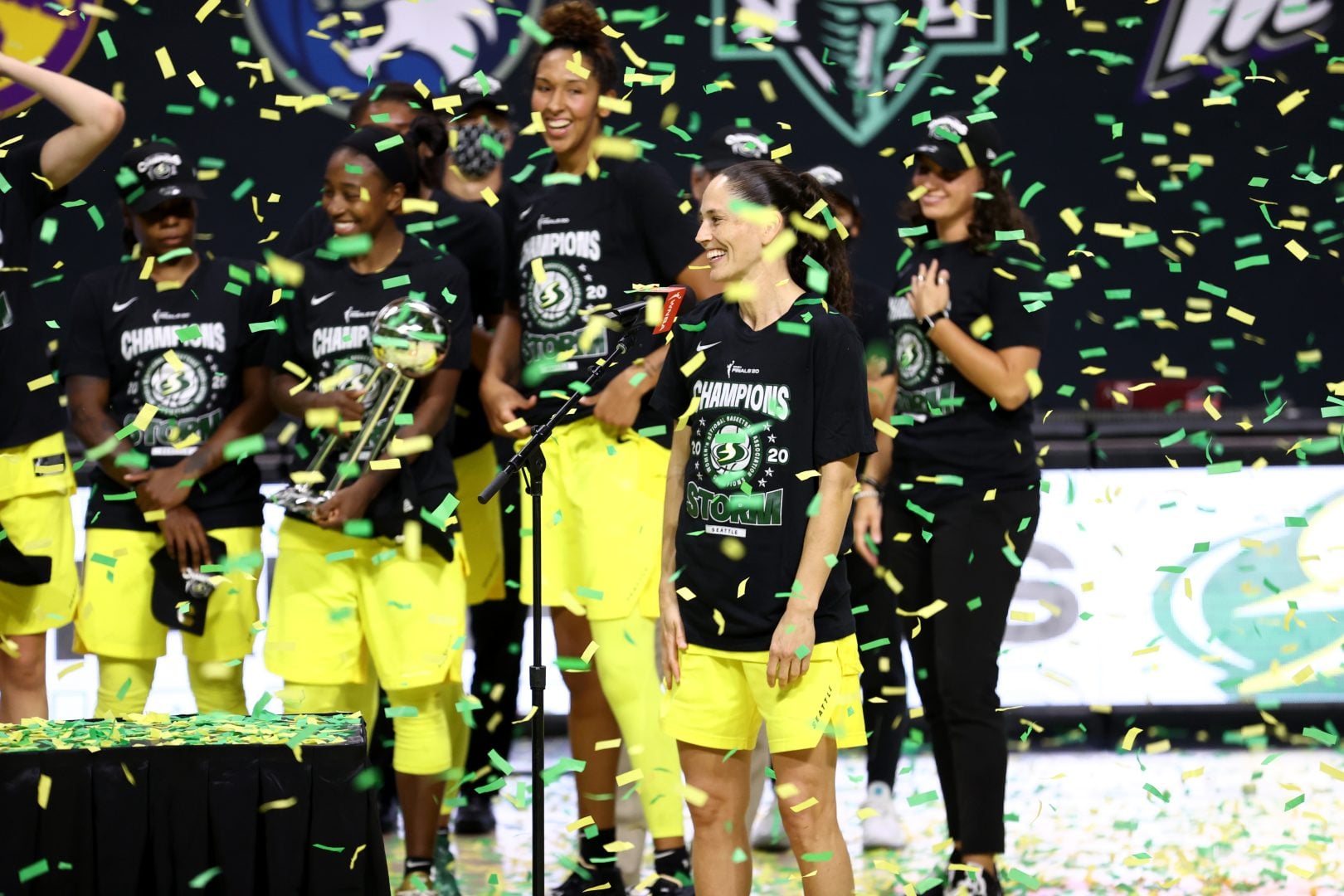
2018, the first word that comes to mind is surprise, because nobody expected it. I think we were picked to finish seventh or eighth that year. So nobody expected it. So, surprise. Man, I think gratitude. I know it’s similar to thankful, but I think gratitude because I really didn’t expect it. We were just in a rebuild two years prior. I did not expect to get back to the Finals. So I just remember feeling super, super thankful and just a lot of gratitude for the opportunity. And then let me think… Youthful. Outside of me, and then I guess maybe, Lang and AC were over 30, but it was a really young team and I picked the word youthful because they made me feel young. And when I felt young, I ended up playing young.
2020, man, that championship meant more than just basketball because of the bubble, because of where we were during that time. What words would I use? Impactful. Honestly, hard. That that whole situation was really hard, but also rewarding.
SLAM: And speaking of those last two titles, the question I want to ask you very quickly before my last one is about a quote you said from a long time ago that really resonated with me. You had paraphrased something Geno Auriemma said about being a floor general. Essentially, everything that goes wrong is on you and everything that you do well is a credit to your teammates. It made me think about those last two chips where, like you said, you were part of a younger crew. Did your perspective on leadership change at all in those last two title runs?
SB: Yeah, definitely. Listen, you play a lot. As an athlete, you’re obviously playing, outside of because you love it, but you’re playing because you usually have something to prove and you want to, again, establish yourself and you want to achieve things. And that remains true for me in 2018 and 2020. But there was a shift.
There really was a shift in terms of, like, I wasn’t just playing for myself anymore. I now felt this duty and obligation to bring these young players along, which by the way, they didn’t need a ton of help. They were so talented. It wasn’t about that. But I definitely felt like my role was more about guiding them and setting them up, not just for success in the moment, but even in the future of their careers.
It was really special because the more I did that, the more I ended up getting all the things that I just talked about before, right? We win a championship. I’m honored in certain ways during those years. It was a really special relationship between putting others first, but then ultimately getting to achieve what you set out to do, too.
SLAM: And you definitely did set them up for success because they’re still going and still winning.
SB: They’re doing alright. The babies are doing all right.
SLAM: My last one for you, Sue, is something that you had just mentioned a moment ago about speaking to the Needle as if it were a person. If the actual land of Seattle, you know, the dirt, the sky, the trees, had ears and they could hear you, what would you say to the actual land of Seattle about the role that’s played in your life?
SB: I would probably thank it. I’ve always said this. I think it’s not unique to an athlete. I think this is really everybody’s journey. But you kind of grow up at different times and at different places in your life. There’s where you actually were born and raised and you grow up there.
I think for me, the places my career took me, Seattle, getting drafted at 21, retiring at 41, I really grew up there. This is a city that watched me grow. They were with me, you know, the highs and the lows of it all. I became an adult there. I really learned a lot about who I was, not just on the court, but off the court.
So I’m really just thankful that I had the opportunity to do it there and that they were with me along for that ride. Because it was… you know, I played there 20-ish years. We only won 4 times, so it wasn’t like it was success all the time. But you need a city, you need a community that’s going to be with you through it all. And so I’m just really thankful for that. And I also think the city helped shape me–like who I am as a player for sure, but also who I am as a person. A lot of how I am in the world comes from playing in Seattle.